Today's
EarthStation1.com 15% (Or More!) Off Commemorative Memorial Title:
TV Commercials: The Classics Vol. 8 DVD, MP4 Download, USB Flash
Drive
Today, July 23, 2026
July 23: National Vanilla Ice Cream Day:
-- An annual tips of the hat to the second most popular flavor in
America! Take a bow, vanilla. I scream, you scream, we all scream
for VANILLA ICE CREAM!! Of course, the day is part of National Ice
Cream Month and not too far behind National Ice Cream Day. Since
Americans love vanilla ice cream so much, it shouldn't come as a
surprise that vanilla is the most common flavoring in North
America for ice cream. In fact, many people consider vanilla ice
cream to be the default flavor. Many may be familiar with Thomas
Jefferson's vanilla ice cream recipe. The third president of the
United States may have discovered a love for the vanilla flavor
while visiting France. While he wouldn't have been the first to
savor the delicious taste of vanilla ice cream, Jefferson enjoyed
jotting down recipes. The same applied to ice cream. He also
produced a handwritten copy of a vanilla ice cream recipe in the
1780s. Only ten copies remain. In fact, the Library of Congress
houses one copy that has a cookie recipe on the flip side. Today,
the ice cream parlor at Mt. Rushmore in South Dakota serves the
same recipe so that anyone can have a taste. To observe National
Vanilla Ice Cream Day: Make your own with this old fashioned
homemade vanilla ice cream recipe for you to enjoy! While you're
at it, invite some friends to enjoy it with you. Maybe, go out for
some vanilla ice cream. Scoop up a dish full from the ice cream in
your freezer. Will you add chocolate syrup or caramel? Oh, and
don't forget the sprinkles! On Sale Until Midnight Tonight PT!
https://store.earthstation1.com/tv-commercials-the-classics-vol-8-dv8.html
Today's
EarthStation1.com 15% (Or More!) Off Commemorative Memorial Title:
HRH The Prince Of Wales: The Earth In Balance DVD, Download, USB
Drive
Today, July 23, 2026
July 23: Hot Enough For Ya Day: ---
Summer is slowly reaching its peak, and so is everyone's patience
with the weather. Today we find a way to make light of the balmy
and muggy heat. Summer days and nights are usually filled with hot
and humid atmospheres with extremely high temperatures. During
this time, people tend to lose interest in their daily activities
because of how overwhelmingly hot the weather is. Many also avoid
going out in fear of getting heatstroke. But all is not doom and
gloom with the summer weather. You can plan interesting activities
that revolve around making the most of the summer, and you can
start all this by asking the question, 'Is it hot enough for ya?'.
It is uncertain as to who or when the first Hot Enough For Ya Day
was started, but one thing is clear: Someone somewhere was quite
fed up with the hot weather that they went around asking people
"Hot enough for ya?" for the fun of it. The peak months
for summer in the northern hemisphere are June, July, and August.
During these months, many countries experience heat waves and mid
to high levels of humidity. Some places also go through sandstorms
and monsoon rains. People tend to avoid these summer conditions by
either staying indoors or venturing out only when it becomes
extremely necessary and important. As peak summer hits, things
like heat stroke, suffocation, high blood pressure, and muscle
cramps go on the rise. So, you are stuck at home due to the
weather, and you don't feel like doing anything? Don't worry
because National Today has got your back! You can start your day
with things that will cool you down. It could be eating a bowl of
ice cream or drinking a cold glass of lemonade. Swimming is
another great option. For centuries now, people have been making a
beeline for water bodies to cool themselves down. A splash in the
water does the trick when nothing else works. Furthermore, if
swimming is not your go-to thing, you can still make it a fun day
by traveling to cooler regions of the world during this time of
the year. Spending a few days or weeks in colder countries will
uplift your mood automatically. If all else still fails, do not
worry, just do whatever floats your boat within the cool vicinity
of your homes. On Sale Until Midnight Tonight PT!
https://store.earthstation1.com/hrh-the-prince-of-wales-the-earth-in-balance-dvd.html
Today's
EarthStation1.com 15% (Or More!) Off Commemorative Memorial Title:
Behind The Horoscope: Validating Natal Astrology DVD, MP4, USB
Drive
Today, July 23, 2026
July 23 - August 23 (2023): Solar
Zodiacal Transits: -- Leo (Latin: "Lion"; from Greek
"Leon"), the fifth astrological sign in the Zodiac, is
entered by the Earth's Sun, which will transit the sign in 2021
until August 22, according to the tropical zodiacal system. The
ruler of the sign of Leo is the Sun, and Neptune and Pluto are in
their exaltation; Saturn and Uranus are in their detriment, and no
planet is in its fall. Leo is one of the triplicity of
astrological signs of the element of fire, and as such a positive
sign, it is an active, yang, masculine sign as one of the six
odd-numbered signs of the zodiac - Aries, Gemini, Leo, Libra,
Sagittarius, or Aquarius - all signs which constitute the fire and
air triplicities. Leo is a one of the four fixed astrological
signs, also known as kerubic (or cherubic) astrological signs,
signs assigned to the middle of one of the four seasons, and as
such, Leo marks the middle of summer in the northern hemisphere,
and the middle of winter in the southern hemisphere, and signifies
the zodiacal archetype of the entirety of the season. Fixed signs
- Taurus, Leo, Scorpio and Aquarius - are associated with
stabilization, determination, depth and persistence. On the other
hand, those who hold this astrological quality tend to also be
inflexible, rigid, stubborn, opinionated and single-minded. These
traits are often paired with the need to be considered "right":
they will ruthlessly fight on behalf of their beliefs, sometimes
regardless of valid contrary beliefs. Once set on a path, they are
fiercely determined and will not change course. Cancer spans 120
dg to 150 dg of celestial longitude. Under the tropical zodiac,
the sun transits this area between July 22 and August 22 in 2021.
In sidereal astrology, the Sun currently transits the
constellation of Leo from August 16 and September 15 in 2021. The
ancient Egyptians referred to the constellation as "Knem",
and worshipped the constellation because it was present during the
flooding of the Nile River. This event signified plentiful
harvests for the upcoming year, and the people interpreted it as a
gift from the earth. The Egyptian pharaoh Tutankhamun's gold
throne features lion heads where the seat and front legs meet, as
well as clawed feet at the end of each leg, symbolizing power and
royalty. The lion is a very important and prominent symbol in
Greek mythology, where the constellation Leo is associated in
Greek mythology with the Nemean lion, a vicious monster in Greek
mythology that lived at Nemea. It was eventually killed by
Heracles. It could not be killed with mortals' weapons because its
golden fur was impervious to attack. Its claws were sharper than
mortals' swords and could cut through any armor. Today, lions are
not part of the Greek fauna. The Asiatic lion subspecies formerly
ranged in southeastern Europe. According to Herodotus, lion
populations were extant in Ancient Greece. George Schaller asserts
that they may have been present in the area until circa 100 BC. On
Sale Until Midnight Tonight PT!
https://store.earthstation1.com/behind-the-horoscope-dvd-astrology-investigation-documentary.html
Today's
EarthStation1.com 15% (Or More!) Off Commemorative Memorial Title:
The Guns Of August (1964) WWI Film DVD, Video Download, USB Drive
Today, July 23, 2026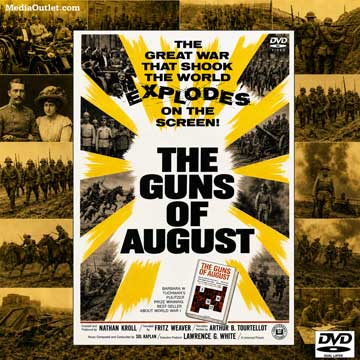
July 23, 1914: Causes Of The European
Civil War (Events Leading To The European Civil War): Causes Of
World War I (Events Leading To World War I): The Guns Of August:
The July Crisis: Austria-Hungary's Ultimatum To Serbia: --
Austria-Hungary issues a series of demands in an ultimatum to the
Kingdom of Serbia demanding Serbia to allow the Austrians to
determine who assassinated Archduke Franz Ferdinand. The demands
were crafted to be so stringent that the Serbian's would be forced
to reject them, which would allow Austria-Hungary a specious
excuse to blame Serbia for an outbreak of war over them. According
to the terms of the ultimatum delivered on July 23, the Serbian
government would have to accept an Austro-Hungarian inquiry into
the assassination, notwithstanding its claim that it was already
conducting its own internal investigation. Serbia was also to
suppress all anti-Austrian propaganda and to take steps to root
out and eliminate terrorist organizations within its borders --
one such organization, the Black Hand, was believed to have aided
and abetted the archduke's killer, Gavrilo Princip, and his
cohorts, providing weapons and safe passage from Belgrade to
Sarajevo. The Dual Monarchy demanded an answer to the note within
48 hours -- by that time, however, anticipating Serbian defiance,
Gieslingen had already packed his bags and prepared to leave the
embassy. Serbia's response effectively accepted all terms of the
demands of the ultimatum except one: it would not accept
Austria-Hungary's participation in any internal inquiry, stating
that this would be a violation of the Constitution and of the law
of criminal procedure. This rejection gave Austria-Hungary the
excuse it wanted to declare war on Serbia, which it did on July
28. The July Crisis was a series of interrelated diplomatic and
military escalations among the major powers of Europe in the
summer of 1914 that was the penultimate cause of World War I. The
crisis began on June 28, 1914, when Gavrilo Princip, a Serbian and
Yugoslavic partisan, assassinated Archduke Franz Ferdinand, heir
presumptive to the Austro-Hungarian throne. A complex web of
alliances, coupled by miscalculations by many leaders that war was
in their best interests or that a general war would not occur,
resulted in a general outbreak of hostilities among every major
European nation in early August 1914. Austria-Hungary believed
Serbia promoted South Slavs' irredentist movements (political and
popular movements to reclaim and occupy land the movement
considers "lost" from their nation's past) in order to
be a threat to the unity of the nation. Following the
assassination, Austria sought to inflict a military blow on Serbia
to demonstrate strength and so Serbia would be more cautious about
supporting Yugoslavic nationalism. However, it was wary of the
reaction of the Russian Empire, who were a major supporter of
Serbia, so sought a guarantee from its ally Germany that it would
support Austria in any conflict. Germany guaranteed its support,
but urged Austria to attack quickly, while world sympathy for the
murdered heir was high, in order to localize the war and avoid
drawing in Russia. Some German leaders believed that growing
Russian economic power would change the balance of power between
the two nations, that a war was inevitable, and that Germany would
be better off if a war happened soon. However, rather than a quick
attack with available military forces, Austrian leaders
deliberated into mid-July before deciding that it would give
Serbia a harsh ultimatum on 23 July and would not attack without a
full mobilization of its army that could not be accomplished
before 25 July 1914. Just prior to the Serbian reply to the
ultimatum, Russia decided that it would intervene in any
Austro-Serbian war and ordered a partial mobilization of its armed
forces. While Russian military leadership acknowledged that Russia
was not yet strong enough for a general war, Russia believed the
Austrian grievance against Serbia was a pretext orchestrated by
Germany and that it needed to show strength by protecting its
Serbian ally. This mobilization was the first major military
action not by a direct participant in the conflict between
Austria-Hungary and Serbia; it increased the willingness of Serbia
to defy the threat of an Austrian attack and greatly increased the
alarm in Germany about masses of Russian troops being assembled
near its borders. Previously, the German military predicted that
Russian mobilization would be slower than that of its French ally
on Germany's opposite border; therefore, German military strategy
in any conflict with Russia was to attack through Belgium to avoid
French fixed defenses and quickly defeat France in the west before
turning to face Russia in the east. France was aware that it would
have to act together with its Russian ally to defeat its German
rival, so escalated its preparations as tensions along the Russian
border increased, which in turn further alarmed Germany. While
Great Britain was aligned with Russia and France, it also had
relatively friendly diplomatic relations with Germany, and many
British leaders saw no compelling reason to involve Britain in a
Continental war. Britain repeatedly offered to mediate, using the
Serbian reply as the basis of negotiation, and Germany made
various promises in an attempt to ensure British neutrality.
However, Britain decided that it had a moral obligation to defend
Belgium and aid its formal allies, becoming the last major nation
to formally enter the conflict on 4 August. In early August, the
ostensible reason for armed conflict, the dispute between Serbia
and Austria-Hungary over the murdered heir, had already become a
sidenote to a general European war. On Sale Until Midnight Tonight
PT!
https://store.earthstation1.com/the-guns-of-august-dvd-1964-world-war-i-movie-documen1964.html
Today's
EarthStation1.com 15% (Or More!) Off Commemorative Memorial Title:
Hollywood (1980) Silent Movie History Series DVD, Video Download,
USB
Today, July 23, 2026
July 23, 1926: Film (Motion Pictures):
The History Of The Film Industry (The History Of The Motion
Picture Industry): Sound Films: Film Sound Production:
Sound-On-Film: Optical Sound: The Movietone Sound System: -- The
Movietone Sound System, an optical sound-on-film method of
recording sound for motion pictures that guarantees
synchronization between sound and picture, first brings the
sound-on-film method into commercial use when Hungarian-American
film executive William Fox of the Fox Film Corporation buys the
entire Movietone sytsem and its patents. Although Fox owned the
patents to Theodore Case's invention of Movietone, as well as
those of Movietone co-inventor and cameraman Freeman Harrison
Owens, and the American rights to the German Tri-Ergon
sound-on-film patents of inventors, Josef Engl, Joseph Massolle
and Hans Vogt, the Movietone sound film system uses only the
inventions of Case Research Lab. The Movietone Sound System
guarantees synchronization between sound and picture by recording
the sound as a variable-density optical track on the same strip of
film that records the pictures. The initial version was capable of
a frequency response of 8500 Hz. Although sound films today use
variable-area tracks, any modern motion picture theater (excluding
those that have transitioned to digital cinema) can play a
Movietone film without modification to the projector (though if
the projector's sound unit has been fitted with red LED or laser
light sources, the reproduction quality from a variable density
track will be significantly impaired). Movietone was one of four
motion picture sound systems under development in the U.S. during
the 1920s, the others being DeForest Phonofilm, Warner Brothers'
Vitaphone, and RCA Photophone, though Phonofilm was primarily an
early version of Movietone. On Sale Until Midnight Tonight PT!
https://store.earthstation1.com/hollywood-1980-tv-documentary-series-13-shows-4-dual-lay1980134.html
Today's
EarthStation1.com 15% (Or More!) Off Commemorative Memorial Title:
Universal Newsreels: The Space Race Films DVD MP4 Download USB
Drive
Today, July 23, 2026
July 23, 1962: The History Of Rocketry:
The History Of Spaceflight: The Aftermath Of World War II: The
Cold War: The Spage Age: The Space Race: The United States Space
Program: Earth Satellites: Weather Satellites (Meteorological
Satellites): Communications Satellites: Telstar 1 (Telstar): The
History Of Broadcasting: The History Of Television Broadcasting:
Transatlantic Satellite Television Transmissions: -- Telstar
relays the first publicly transmitted live trans-Atlantic program
via satellite at 3:00 pm EDT, with Walter Cronkite as one of the
main presenters in this multinational broadcast. The broadcast was
made possible in Europe by Eurovision and in North America by NBC,
CBS, ABC, and the CBC. The first public broadcast featured CBS's
Cronkite and NBC's Chet Huntley in New York, and the BBC's Richard
Dimbleby in Brussels. Walter Cronkite was in the New York studio
at Rockefeller Plaza as the first pictures to be transmitted and
received were the Statue Of Liberty in New York and the Eiffel
Tower in Paris. The first segment included a televised major
league baseball game between the Philadelphia Phillies and the
Chicago Cubs at Wrigley Field. From there, the video switched
first to Washington, D.C.; then to Cape Canaveral, Florida; then
to Quebec City, Quebec, and finally to Stratford, Ontario. The
Washington segment included a press conference with President
Kennedy, talking about the price of the American dollar, which was
causing concern in Europe. This broadcast inaugurated live
intercontinental news coverage, which was perfected later in the
sixties with Early Bird and other Intelsat satellites
(communications satellites providing international broadcast
services owned and managed by an intergovernmental consortium).
The first transatlantic satellite television transmission occured
during a test broadcast on July 11, 1962 via the just-launced
communications satellite Telstar. The day before, on July 10,
1962, Telstar 1, best known simply as Telstar, the first of the
Telstar series and the world's first communications satellite, was
launched into medium orbit from Cape Canaveral, and was the first
privately sponsored space launch. Telstar is the name of various
communications satellites produced by American Telephone And
Telegraph (ATT). The first two Telstar satellites were
experimental and nearly identical. Telstar 1 launched on top of a
Thor-Delta rocket on July 10, 1962. It successfully relayed
through space the first television pictures, telephone calls, and
telegraph images, and provided the first live transatlantic
television feed. Telstar 2 launched May 7, 1963. Telstar 1 and 2,
though no longer functional, still orbit the Earth. On Sale Until
Midnight Tonight PT!
https://store.earthstation1.com/universal-newsreels-the-space-race-films-dvd-mp4-download-usb-driv4.html
Today's
EarthStation1.com 15% (Or More!) Off Commemorative Memorial Title:
Fall Of The Great Society & The Silent Majority: LBJ &
Nixon MP4 DVD
Today, July 23, 2026
July 23, 1967: Civil Rights Movements:
The American Civil Rights Movement (1954-1968): The Ghetto Riots
(The Ghetto Rebellions, The Race Riots, The Negro Riots)
(1964-1969): The Long, Hot Summer of 1967: The Detroit Riots: The
1967 Detroit Riot (The 12th Street Riot, The Detroit Uprising): --
The bloodiest race riot in the "Long, Hot Summer Of 1967",
one of the worst riots in United States history, begins in the
early hours of a Sunday on 12th Street in Detroit, Michigan in the
predominantly African American inner city. Also known as the 12th
Street Riot and the Detroit Rebellion, it consisted mainly of
confrontations between black people and police. The precipitating
event was a police raid of an unlicensed, after-hours bar then
known as a blind pig, on the city's Near West Side. It exploded
into one of the deadliest and most destructive riots in American
history, lasting five days and surpassing the violence and
property destruction of Detroit's 1943 race riot 24 years earlier.
To help end the disturbance, Governor George W. Romney ordered the
Michigan Army National Guard into Detroit, and President Lyndon B.
Johnson sent in the United States Army's 82nd and 101st Airborne
Divisions. The result was 43 dead, 1,189 injured, over 7,200
arrests, and more than 2,000 buildings destroyed. The scale of the
riot was the worst in the United States since the 1863 New York
City draft riots during the American Civil War, and was not
surpassed until the 1992 Los Angeles riots 25 years later. The
riot was prominently featured in the news media, with live
television coverage, extensive newspaper reporting, and extensive
stories in Time and Life magazines. The staff of the Detroit Free
Press won the 1968 Pulitzer Prize for general local reporting for
its coverage. The Ghetto Riots were as series of outbreaks of
violent summer social unrest by African American groups across the
United States in the mid-to-late 1960s. The six days of unrest
throughout New York City during The Harlem Riot Of 1964 is viewed
as the first of clusters of riots, uncoordinated with each other,
evidently unplanned, most often in cities during the summer
months. The pattern caused 159 separate incidents of violence and
unrest over the long, hot summer of 1967 (the most destructive
riots taking place in Detroit and Newark), came to a climax during
the national wave of King assassination riots in over 100 American
cities in 1968, and subsided in 1969. Isaac Hayes, co-author of
the Sam & Dave hit single "Soul Man", found the
inspiration for the song in the turmoil of The 1967 Detroit Riot
while watching a television newscast of the aftermath of the riot;
Hayes noted that black residents had marked buildings that had not
been destroyed during the riots - mostly African-American owned
and operated institutions - with the word "soul".
Relating this occurrence to the biblical story of the Passover,
Hayes and his co-author of the song partner David Porter came up
with the idea, in Hayes's words, of "a story about one's
struggle to rise above his present conditions. It's almost a tune
kind of like boasting, 'I'm a soul man.' It's a pride thing."
On Sale Until Midnight Tonight PT!
https://store.earthstation1.com/fall-of-the-great-society-amp-the-silent-majority-lbj-amp-nixon-mp4-dv4.html
Today's
EarthStation1.com 15% (Or More!) Off Commemorative Memorial Title:
Eyes On The Prize II: America At The Racial Crossroads DVD MP4 USB
Today, July 23, 2026
July 23, 1968: Civil Rights Movements:
The American Civil Rights Movement (1954-1968): The Ghetto Riots
(The Ghetto Rebellions, The Race Riots, The Negro Riots)
(1964-1969): Black Power: The Black Power Movement (Black
Liberation Movement): The Glenville Riots: The Glenville Shootout:
-- In Cleveland, Ohio, a violent shootout between a Black Militant
organization and the Cleveland Police Department occurs. During
the shootout, a riot begins and lasts for five days. The Glenville
shootout was a gun battle which occurred on the night of July
23-24, 1968, in the Glenville section of Cleveland, Ohio, in the
United States. Gunfire was exchanged for roughly four hours
between the Cleveland Police Department and the Black Nationalists
of New Libya, a Black Power group. The battle led to the death of
three policemen, three suspects, and a bystander. At least 15
others (police, gunmen, and bystanders) were wounded. The gun
battle sparked the Glenville Riots, which began on the evening of
July 23 as the gun battle was winding down, and continued through
the evening of July 26-27. During the first day of the riots, the
African American mayor of Cleveland, Carl Stokes, refused to allow
white police officers to patrol the area. When African American
leaders in the neighborhood were unable to quell the violence,
Stokes sent the Ohio Army National Guard and the rest of the
Cleveland Police into the area to stop the violence. The riots
ended early in the morning on July 27. Losses due to the riots
were about 2.6M USD, and proved to be the political death knell of
Mayor Stokes' Cleveland: Now! redevelopment effort. The alleged
instigator of the gunfight, Ahmed Evans, was found guilty of
murder and sentenced to death. His sentence was later commuted to
life in prison. The Ghetto Riots were as series of outbreaks of
violent summer social unrest by African American groups across the
United States in the mid-to-late 1960s. The six days of unrest
throughout New York City during The Harlem Riot Of 1964 is viewed
as the first of clusters of riots, uncoordinated with each other,
evidently unplanned, most often in cities during the summer
months. The pattern caused 159 separate incidents of violence and
unrest over the long, hot summer of 1967 (the most destructive
riots taking place in Detroit and Newark), came to a climax during
the national wave of King assassination riots in over 100 American
cities in 1968, and subsided in 1969. On Sale Until Midnight
Tonight PT!
https://store.earthstation1.com/eyes-on-the-prize-ii-dvd-set-4-discs-complete-2nd-seri42.html
Today's
EarthStation1.com 15% (Or More!) Off Commemorative Memorial Title:
Chairman Mao Tse-Tung aka Mao Zedong Documentaries DVD, Download,
USB
Today, July 23, 2026
July 23, 1921: China: The History Of
China: The People's Republic of China (PRC): The Chinese Communist
Party (CCP) (The Communist Party of China (CPC)): National
Congresses Of The Chinese Communist Party (Chinese: Zhongguo
Gongchandang Quanguo Daibiao Dahui, "The Chinese Communist
Party National Representatives Congress"): The 1st National
Congress Of The Communist Party Of China (The Founding National
Congress): -- The Communist Party of China (CPC) is established at
the founding National Congress. The 1st National Congress of the
Communist Party of China was held in Shanghai and Jiaxing between
July 23 and August 2, 1921. The Congress established the Communist
Party of China. The congress began in the French Concession area
of Shanghai inside a shikumen building (Shanghainese, lit. "Stone
Warehouse Gate", a Shanghainese architectural style combining
Western and Chinese elements) near present-day Xintiandi in
Huangpu District. In early June 1921, Dutch national Henk
Sneevliet, also known as Ma Lin, a representative of Comintern,
arrived in Shanghai, and urged various Communist cells in the
country to get together for a national-level meeting. Russian
Comintern representative Nikolski also attended the meeting. At
the time, there were 57 members of the Communist Party of China.
Notably, the two founders of the party did not attend the
congress: Chen Duxiu and Li Dazhao. The meeting was put to an end
due to harassment from the French Concession police on July 30.
The delegates then agreed to move the meeting to a rented tourist
boat on South Lake in Jiaxing. The Congress elected Chen Duxiu as
Secretary, Zhang Guotao as Director of Organization, and Li Da as
Director of Propaganda. Of the 13 representatives who attended the
congress in 1921, only two would be present at the proclamation
ceremony of the People's Republic Of China 27 years later: Mao
Zedong and Dong Biwu. Others either became casualties of war in
the decades that followed or left the party in one way or another
(e.g. by expulsion or defection). The site of the conference in
Shanghai has been converted into a museum since 1961. The South
Lake Revolutionary Museum in Jiaxing located on a central island
of the lake was constructed in 1959; a complex hosting more
exhibits was constructed north of South Lake in 2011, also to
commemorate the 1st Congress. On Sale Until Midnight Tonight PT!
https://store.earthstation1.com/mao-tse-tung-dvd-portraits-of-power-cbs-biography-documentaries.html
Today's
EarthStation1.com 15% (Or More!) Off Commemorative Memorial Title:
Portraits Of Power: Gamal Abdel Nasser DVD, Video Download, USB
Drive
Today, July 23, 2026
July 23: Revolution Day: -- July 23,
1952: Egyptian History: Modern Egyptian History: The Egyptian
Revolution Of 1952 (The Egyptian Revolution): -- General Muhammad
Naguib leads the Free Officers Movement (formed by Gamal Abdel
Nasser, the real power behind the coup) in overthrowing King
Farouk of Egypt, changing Egypt from a monarchy to a republic. The
revolution is commemorated each year on July 23. Also known as the
Egyptian Coup D'Etat of 1952, or The July 23 revolution, the coup
was initially aimed at overthrowing King Farouk. However, the
movement had more political ambitions, and soon moved to abolish
the constitutional monarchy and aristocracy of Egypt and Sudan,
establish a republic, end the British occupation of the country,
and secure the independence of Sudan (previously governed as an
Anglo-Egyptian condominium). The revolutionary government adopted
a staunchly nationalist, anti-imperialist agenda, which came to be
expressed chiefly through Arab nationalism, and international
non-alignment. The coup was faced with immediate threats from
Western imperial powers, particularly the United Kingdom, which
had occupied Egypt since 1882, and France, both of whom were wary
of rising nationalist sentiment in territories under their control
throughout the Arab world, and Africa. The ongoing state of war
with Israel also posed a serious challenge, as the Free Officers
increased Egypt's already strong support of the Palestinians.
These two issues conflated four years after the coup when Egypt
was invaded by Britain, France, and Israel in the Suez Crisis of
1956. Despite enormous military losses, the war was seen as a
political victory for Egypt, especially as it left the Suez Canal
in uncontested Egyptian control for the first time since 1875,
erasing what was seen as a mark of national humiliation. This
strengthened the appeal of the revolution in other Arab and
African countries. Wholesale agrarian reform, and huge
industrialisation programmes were initiated in the first decade
and half of the revolution, leading to an unprecedented period of
infrastructure building, and urbanisation. By the 1960s, Arab
socialism had become a dominant theme, transforming Egypt into a
centrally planned economy. Official fear of a Western-sponsored
counter-revolution, domestic religious extremism, potential
communist infiltration, and the conflict with Israel were all
cited as reasons compelling severe and longstanding restrictions
on political opposition, and the prohibition of a multi-party
system. These restrictions on political activity would remain in
place until the presidency of Anwar Sadat from 1970 onwards,
during which many of the policies of the revolution were scaled
back or reversed. The early successes of the revolution encouraged
numerous other nationalist movements in other Arab, and African
countries, such as Algeria, and Kenya, where there were
anti-colonial rebellions against European empires. It also
inspired the toppling of existing pro-Western monarchies and
governments in the region and the continent. On Sale Until
Midnight Tonight PT!
https://store.earthstation1.com/portraits-of-power-gamal-abdel-nasser-dvd.html
Today's
EarthStation1.com 15% (Or More!) Off Commemorative Memorial Title:
Treblinka's Ivan The Terrible John Demjanjuk + Bonus DVD MP4 USB
Drive
Today, July 23, 2026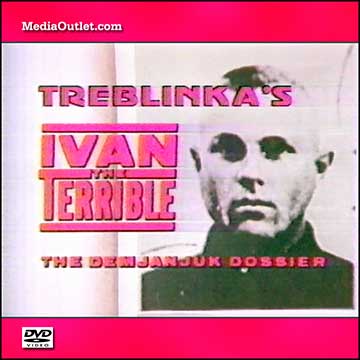
July 23, 1942: The European Civil War:
World War II: The Second European War (The European Theater Of
World War II): The Holocaust (Shoah): The Holocaust In Poland:
Treblinka Extermination Camp: -- Treblinka concentration amp is
opened, the second-deadliest extermination camp to be built and
operated by Nazi Germany in occupied Poland during World War II
(after Auschwitz). Treblinka was located in a forest north-east of
Warsaw, 4 kilometres (2.5 mi) south of the village of Treblinka in
what is now the Masovian Voivodeship. The camp operated between 23
July 1942 and 19 October 1943 as part of Operation Reinhard, the
deadliest phase of the Final Solution. During this time, it is
estimated that between 700,000 and 900,000 Jews were killed in its
gas chambers, along with 2,000 Romani people. More Jews were
killed at Treblinka than at any other Nazi extermination camp
apart from Auschwitz-Birkenau. Managed by the German SS with
asssistance from Trawniki guards - recruited from among Soviet
POWs to serve with the Germans - the camp consisted of two
separate units. Treblinka I was a forced-labour camp
(Arbeitslager) whose prisoners worked in the gravel pit or
irrigation area and in the forest, where they cut wood to fuel the
cremation pits. Between 1941 and 1944, more than half of its
20,000 inmates died from shootings, hunger, disease and
mistreatment. The second camp, Treblinka II, was an extermination
camp (Vernichtungslager), referred to euphemistically as the
SS-Sonderkommando Treblinka by the Nazis. A small number of Jewish
men who were not killed immediately upon arrival became members of
its Sonderkommando whose jobs included being forced to bury the
victims' bodies in mass graves. These bodies were exhumed in 1943
and cremated on large open-air pyres along with the bodies of new
victims. Gassing operations at Treblinka II ended in October 1943
following a revolt by the prisoners in early August. Several
Trawniki guards were killed and 200 prisoners escaped from the
camp; almost a hundred survived the subsequent pursuit. The camp
was dismantled ahead of the Soviet advance. A farmhouse for a
watchman was built on the site and the ground ploughed over in an
attempt to hide the evidence of genocide. In the postwar Polish
People's Republic, the government bought most of the land where
the camp had stood, and built a large stone memorial there between
1959 and 1962. In 1964, Treblinka was declared a national monument
of Jewish martyrdom in a ceremony at the site of the former gas
chambers. In the same year the first German trials were held
regarding the crimes committed at Treblinka by former SS members.
After the end of communism in Poland in 1989, the number of
visitors coming to Treblinka from abroad increased. An exhibition
centre at the camp opened in 2006. It was later expanded and made
into a branch of the Siedlce Regional Museum. On Sale Until
Midnight Tonight PT!
https://store.earthstation1.com/trebilinka39s-iva-the-terrible-the-demjanjuk-dossier-d39.html
Today's
EarthStation1.com 15% (Or More!) Off Commemorative Memorial Title:
The Unknown War: The Great Patriotic War Series WWII USSR DVD MP4
USB
Today, July 23, 2026
July 23, 1942: The European Civil War:
World War II: The Second European War (The European Theater Of
World War II): The Eastern Front Of World War II: The Great
Patriotic War (The German-Soviet War): Case Blue (German: Fall
Blau): The Battle Of The Caucasus: Operation Edelweiss, Operation
Braunschweig: -- Two combined German Offensives begin: Operation
Edelweiss, a German plan to gain control over the Caucasus and
capture the oil fields of Baku, and Operation Braunschweig, the
German summer offensive that began on June 28, 1942 which included
Operation Edelweiss as well as Operation Fischreiher, the conquest
of Stalingrad. Hitler had personally intervened in the plans for
these operations, and ordered a split in Army Group South. This
division of Army Group South had caused alarm in the General
Staff, and Hitler was warned repeatedly about the dangers this
division entailed. Complaints from the field caused Hitler to
dismiss and replace the Commander of Army Group South, Field
Marshal Fedor von Bock on July 15. Later studies confirmed this
split to be one of the main causes for the eventual demise of the
German 6th Army in Stalingrad. Hitler persisted in this division
of Army Group South for strategic reasons: acquiring the oilfields
in the Caucasus region and cutting Soviet supply transports along
the Volga through Stalingrad. The Battle of the Caucasus is a name
given to a series of Axis and Soviet operations in the Caucasus
area on the Eastern Front of World War II. On 25 July 1942, German
troops captured Rostov-on-Don, Russia, opening the Caucasus region
of the southern Soviet Union, and the oil fields beyond at Maikop,
Grozny, and ultimately Baku, to the Germans. Two days prior, Adolf
Hitler issued a directive to launch such an operation into the
Caucasus region, to be named Operation Edelweiss. On Sale Until
Midnight Tonight PT!
https://store.earthstation1.com/the-unknown-war-complete-tv-series-soviet-union-wwii-10-dvd-s10.html
Today's
EarthStation1.com 15% (Or More!) Off Commemorative Memorial Title:
Light In The Dark: Lvov Sewer Holocaust Survivors DVD, Download,
USB
Today, July 23, 2026
July 23, 1944: The European Civil War:
World War II: The Second European War (The European Theater Of
World War II): The Eastern Front Of World War II: The Polish
Resistance Movement In World War II: Operation Tempest (Polish:
Akcja Burza, "Operation Storm"): The Lwow Uprising
(Polish: Powstanie Lwowskie): -- The Lwow Uprising begins, an
armed insurrection by the Home Army (Polish: Armia Krajowa),
underground forces of the Polish resistance movement in World War
II, against the Nazi German occupation of the major western
Ukrainian city of Lwow, part of a secret plan codenamed Operation
Tempest for a countrywide all-national uprising ahead of the
Soviet advance on the Eastern Front during World War II. The Lwow
uprising lasted until July 26-27, when the Soviet 3rd Guards Tank
Army captured Lwow after their successful Lvov-Sandomierz
Offensive of July 1944, capturing it from the Nazis with
significant cooperation from the local Polish resistance engaged
in the Lwow Uprising. Soon after the capture of Lviv, the local
commanders of the Polish Armia Krajowa were invited to a meeting
with the commanders of the Red Army. During the meeting, they were
arrested, as it turned out to be a trap set by the Soviet NKVD.
Later, in the winter and spring of 1945, the local NKVD kept
arresting and harassing Poles in Lviv (which according to Soviet
sources on October 1, 1944 still had a clear Polish majority of
66.7%) in an attempt to encourage their emigration from the city.
Those arrested were released only after they had signed papers in
which they agreed to emigrate to Poland, which postwar borders
were to be shifted westwards in accordance with the Yalta
conference settlements. In Yalta, despite Polish objections, the
Allied leaders, Joseph Stalin, Franklin D. Roosevelt and Winston
Churchill decided that Lviv should remain within the borders of
the Soviet Union. On August 16, 1945, a border agreement was
signed in Moscow between the government of the Soviet Union and
the Provisional Government of National Unity installed by the
Soviets in Poland. In the treaty, Polish authorities formally
ceded the prewar eastern part of the country to the Soviet Union,
agreeing to the Polish-Soviet border to be drawn according to the
Curzon Line. Consequently, the agreement was ratified on February
5, 1946. The Lwow Uprising (Polish: Powstanie Lwowskie, Akcja
Burza) was an armed insurrection by the Home Army (Polish: Armia
Krajowa) underground forces of the Polish resistance movement in
World War II against the Nazi German occupation of the city of
Lwow (now Lviv, Ukraine) in the latter stages of World War II. It
began on July 23, 1944 as part of a secret plan to launch the
countrywide all-national uprising codenamed Operation Tempest
ahead of the Soviet advance on the Eastern Front. The Lwow
uprising lasted until July 27. Shortly afterwards, the Polish
troops were disarmed, soldiers merged into the Polish communist
armed forces and officers arrested by the Soviet NKVD. Some were
forced to join the Red Army, others sent to the Gulag camps. The
city itself was occupied by the Soviet Union. Of the once thriving
Jewish community of Lwow, only 300 Jews survived out of 160,000
living there prior to occupation, and a significant number of
those survivors did so by hiding in the Lvov sewers. On Sale Until
Midnight Tonight PT!
https://store.earthstation1.com/light-in-the-dark-dvd-lvov-sewer-survivors-of-holocaust.html
Today's
EarthStation1.com 15% (Or More!) Off Commemorative Memorial Title:
Portraits Of American Presidents Nos. 1-42 TV Series MP4 Download
DVD
Today, July 23, 2026
July 23, 1885: #DOTD: #RIP: Ulysses S.
Grant, American U.S. Civil War General, Commanding General Of The
Army and then the 18th President Of The United States, the highest
positions in the military and the government of the United States
(b. April 27, 1822) #dies after a year-long struggle with throat
cancer, surrounded by his family, at 8:08 a.m. in his Mount
McGregor cottage at the age of 63. Having faced severe investment
reversals and dying of throat cancer, he rushed to complete his
memoirs in order to provide income for his family after his death,
which he finished immediately prior to his death. These memoirs
proved to be a major critical and financial success, and restored
his family's fortunes. His death prompted an outpouring in support
of national unity. General Sheridan, then Commanding General of
the Army, ordered a day-long tribute to Grant on all military
posts, and President Grover Cleveland ordered a thirty-day
nationwide period of mourning. After private services, the honor
guard placed Grant's body on a special funeral train, which
traveled to West Point and New York City. A quarter of a million
people viewed it in the two days before the funeral. Tens of
thousands of men, many of them veterans from the Grand Army of the
Republic (GAR), marched with Grant's casket drawn by two dozen
black stallions to Riverside Park in the Morningside Heights
neighborhood of Upper Manhattan. His pallbearers included Union
generals Sherman and Sheridan, Confederate generals Simon Bolivar
Buckner and Joseph E. Johnston, Admiral David Dixon Porter, and
Senator John A. Logan, the head of the GAR. Following the casket
in the seven-mile-long (11 km) procession were President
Cleveland, two former living presidents Hayes and Arthur, all of
the president's cabinet, as well as justices of the Supreme Court.
Attendance at the New York funeral topped 1.5 million. Ceremonies
were held in other major cities around the country, while Grant
was eulogized in the press and likened to George Washington and
Abraham Lincoln. Grant's body was laid to rest in Riverside Park,
first in a temporary tomb, and then -- twelve years later, on
April 17, 1897 -- in the General Grant National Memorial, also
known as "Grant's Tomb", the largest mausoleum in North
America. Ulysses Simpson Grant was born Hiram Ulysses Grant in
Point Pleasant, Ohio. Grant led the Union Army to victory over the
Confederacy with the supervision of Abraham Lincoln. As the 18th
President of the United States (1869-77) Grant led the Republicans
in their efforts to remove the vestiges of Confederate nationalism
and slavery during Reconstruction. Grant was born and raised in
Ohio by Methodist parents whose lineage in the new world went back
several generations. As a youth he often worked in his father's
tannery and showed an early talent for riding, taming and managing
horses. After graduating from West Point in 1843 Grant served with
distinction in the Mexican-American War. Upon his return he
married Julia Dent, and together they had four children. Grant
retired from the army in 1854 and struggled financially in
civilian life. When the Civil War began in 1861 he rejoined the
army and quickly rose through the ranks. During the war, he earned
the nickname "Unconditional Surrender" Grant . As a
general he took control of Kentucky, most of Tennessee, won major
battles at Shiloh and seized Vicksburg, gaining control of the
Mississippi River and dividing the Confederacy. These victories,
combined with those in the Chattanooga Campaign, persuaded Abraham
Lincoln that Grant was the general best suited to lead the
combined Union armies. Grant was promoted to Lieutenant General, a
rank previously reserved for George Washington, in March 1864. He
confronted Robert E. Lee, trapping his army in their defense of
Richmond, while coordinating a series of campaigns in other
theaters. In April 1865 Lee surrendered to Grant at Appomattox,
effectively ending the war. Historians have hailed Grant's
military genius, and his strategies are featured in military
history textbooks. After Lincoln's assassination, Grant became
increasingly disillusioned by President Andrew Johnson's approach
to Reconstruction, and drifted toward the "Radical"
Republicans. Elected president in 1868, the youngest man in the
office to that date, Grant stabilized the post-war national
economy, created the Department of Justice, used the military to
enforce laws in the former Confederacy and prosecuted the Ku Klux
Klan. Grant strengthened the Republican Party in the South and
signed three civil rights acts into law. He appointed African
Americans and Jewish-Americans to prominent federal offices. In
1871 he created the first Civil Service Commission. The Democrats
and Liberal Republicans united behind Grant's opponent in the
presidential election of 1872, but Grant was re-elected by a large
margin. Generally regarded as personally honest, he nonetheless
faced accusations of corruption within his administration. Grant's
Peace Policy with Native Americans was a bold departure for its
time. In foreign policy, Grant sought to increase trade and
influence while remaining at peace with the world. With Secretary
Of State Hamilton Fish, he successfully resolved the Alabama
claims with Great Britain (a series of demands for damages sought
by the government of the United States from the United Kingdom in
1869 for the attacks upon Union merchant ships by Confederate Navy
commerce raiders built in British shipyards during the American
Civil War, focused chiefly on damages by the most famous of these
raiders, the CSS Alabama, which took more than sixty prizes before
she was sunk off the French coast in 1864). Grant and Fish
negotiated a peaceful resolution with Spain over the Virginius
Affair. Congress rejected Grant's initiative to annex the
Dominican Republic, creating a rift among Republicans. In national
affairs, Grant's administration implemented a gold standard and
sought to strengthen the dollar. Grant's immediate response to the
Panic of 1873 failed to halt a severe industrial depression that
produced high unemployment, deflation, and bankruptcies. When he
left office in 1877, Grant embarked on a two-and-a-half-year world
tour that captured favorable global attention for him and the
United States. In 1880, Grant was unsuccessful in obtaining the
Republican presidential nomination for a third term. Historical
assessments of Grant's legacy have varied considerably over the
years. Although Grant's presidency has popularly been criticized
for its Gilded Age scandals, modern scholarship regards him as an
embattled president who performed a difficult job during
Reconstruction. Although early rankings of Presidents rated his
administration among the worst, modern appreciation for Grant's
support of civil rights and diverse federal appointments has
greatly improved his historical reputation. On Sale Until Midnight
Tonight PT!
https://store.earthstation1.com/portraits-of-american-presidents-nos-142-tv-series-mp4-download1424.html
Today's
EarthStation1.com 15% (Or More!) Off Commemorative Memorial Title:
Henry Ford: Tin Lizzie Tycoon + Bonus Film DVD, Download, USB
Drive
Today, July 23, 2026
July 23, 1903: The History Of The
Automobile: The History Of The Automotive Industry: The Ford Motor
Company: -- The Ford Motor Company sells its first automobile,
having shipped its first car three days prior, on July 20, 1903.
Henry Ford's first attempt at a car company under his own name was
the Henry Ford Company on November 3, 1901, which became the
Cadillac Motor Company on August 22, 1902, after Ford left with
the rights to his name. The Ford Motor Company was launched in a
converted factory in 1903 with 28K USD in cash from twelve
investors, most notably John and Horace Dodge (who would later
found their own car company). The first president was not Ford,
but local banker John S. Gray, who was chosen to assuage
investors' fears that Ford would leave the new company the way he
had left its predecessor. During its early years, the company
produced just a few cars a day at its factory on Mack Avenue and
later its factory on Piquette Avenue in Detroit, Michigan. Groups
of two or three men worked on each car, assembling it from parts
made mostly by supplier companies contracting for Ford. Within a
decade, the company would lead the world in the expansion and
refinement of the assembly line concept, and Ford soon brought
much of the part production in-house in a vertical integration
that seemed a better path for the era. Henry Ford was 39 years old
when he founded the Ford Motor Company, which would go on to
become one of the world's largest and most profitable companies.
It has been in continuous family control for over 100 years and is
one of the largest family-controlled companies in the world. The
first gasoline powered automobile had been created in 1885 by the
German inventor Carl Benz (Benz Patent-Motorwagen). More efficient
production methods were needed to make automobiles affordable for
the middle class, to which Ford contributed by, for instance,
introducing the first moving assembly line in 1913 at the Ford
factory in Highland Park. Between 1903 and 1908, Ford produced the
Models A, B, C, F, K, N, R, and S. Hundreds or a few thousand of
most of these were sold per year. In 1908, Ford introduced the
mass-produced Model T, which totalled millions sold over nearly 20
years. In 1927, Ford replaced the T with the Model A, the first
car with safety glass in the windshield. Ford launched the first
low-priced car with a V8 engine in 1932. On Sale Until Midnight
Tonight PT!
https://store.earthstation1.com/henry-ford-tin-lizzie-tycoon-dvd-documentary.html
Today's
EarthStation1.com 15% (Or More!) Off Commemorative Memorial Title:
France: Conquest To Liberation In World War II MP4 Video Download
DVD
Today, July 23, 2026
July 23, 1945: The European Civil War:
World War II: The Second European War (The European Theater Of
World War II): Vichy France (The French State): The Liberation Of
France: The Aftermath Of World War II: The High Court Of Justice
(French: Haute Cour De Justice) Court Of Cassation (The French
Supreme Court) Treason Trial Of Philippe Petain: -- The post-war
treason trial against Philippe Petain, former Chief Of State Of
Vichy France and Prime Minister Of Occupied France, begins in a
specially constituted French High Court, the Tribunal de grande
instance de Paris, in Batignolles, a neighbourhood of Paris,
France, part of its 17th arrondissement. Petain had come to power
in 1940 as a national saviour, the one man who would get France
the best deal following military defeat and the 'desertion' of the
British army at Dunkirk. He would negotiate an armistice, but
there would be no peace treaty. Part of France would remain under
French control, the navy and the empire would not be affected, and
the great general who had led the victory parade on the
Champs-Elysees in 1918, the 'Victor of Verdun', would once again
protect his people. The subsequent Vichy regime (described by one
cynic as 'a banana republic without the bananas') was recognised
around the world - even in the United States, which kept an
ambassador in the spa town, France's new capital, from 1941 to
1942. In reality, what followed was the STO (Service du travail
obligatoire), a forced labour programme which obliged 650,000
Frenchmen to work in German factories, the deportation of 24,000
French citizens on the sole grounds that they were Jewish, and the
deployment of French police in the rafles (round ups) of 53,000
Jewish refugees who had fled to France for protection. Following
the liberation of France, on September 8, 1944, a few months after
being greeted by cheering crowds in Paris, Marshal Philippe
Petain, the head of the wartime Etat Francais, was driven across
the German frontier into exile under Gestapo escort along other
members of the French cabinet at Vichy and relocated to the
Sigmaringen enclave in Germany, where they became a
government-in-exile until April 1945. He no longer had access to
the national radio service, so, as he passed through France, typed
copies of his last speech had to be thrown to passers-by from the
window of his car. Petain, having been forced to leave France,
refused to participate in this government and Fernand de Brinon
now headed the "government commission". In a note dated
October 29 1944, Petain forbade de Brinon to use the Marshal's
name in any connection with this new government, and on April 5,
1945, Petain wrote a note to Hitler expressing his wish to return
to France. No reply ever came. Meanwhile, de Gaulle's government
decided to put Petain on trial in absentia before a new high court
was set up to try the Vichy leaders It would be a symbolic
ceremony with only one possible outcome, designed to unify the
nation and heal the humiliation of defeat. However, to everyone's
dismay, and much to de Gaulle's irritation, Petain arrived in
Paris in time to attend the trial, having turned up in France on
the Franco-Swiss border, two days after he was taken on his
birthday to the Swiss side of the border. Petain's most senior
lawyer planned to focus on the Marshal's age (he was 89),
appealing for pity for the former hero of Verdun. Petain was being
tried for treason and "not only the humiliating collaboration
but the subjection of France to Germany". This was, as a
French parliamentarian proclaimed on the eve of the trial: "about
establishing in the eyes of the world that Petain does not
incarnate either France or France's traditions". Not an easy
task, nor a straightforward demonstration. Julian Jackson gives a
chilling and meticulous account of the hopeless mediocrity of
almost all people involved in the case; from judges and jurors
(resistants and parliamentarians) to lawyers prosecutors and
witnesses. Everybody seemed animated by petty or self-serving
feelings; they were either out of their depth or spineless, but
above all most were morally ambivalent. Before it began, De Gaulle
had presciently talked of Petain's trial as a "lamentable but
inevitable" event. There were, however, a few remarkable
minds attending and they could be found on the press benches.
Among them, the formidable Janet Flanner for The New Yorker and
the resistant writer Joseph Kessel, hired by France-Soir. Julian
Jackson's meticulous, engaging history of Petain the collaborator
general and his downfall, as reported by The Guardian who is one
of the primary sources of this listing, describes this event as
'the central crisis of 20th-century French history'. Throughout
the trial, before judges who had previously sworn an oath of
loyalty to the marshal, Petain sat in passive silence, leading
many to wonder how much of the evidence he could understand. As a
Marshal of France, he was given an ornate, cushioned throne rather
than the dock. On this he slumbered, looking his age - 89 -
although he was in many ways much older. Born during the reign of
Napoleon III, he had been taught to read by a priest who had
himself been born in the reign of Louis XV, 15 years before the
French Revolution. The values that Petain had absorbed as a child
in the 1850s were already a century out of date. Facing charges
that he had been a pre-war member of la Cagoule ('the Hood'), a
terrorist conspiracy, and had plotted to seize power and make
peace with the Nazis, he responded with a brief statement: 'I was
begged to come, and I came. I found I had inherited a catastrophic
situation not of my making. Those who were really responsible hid
behind me to deflect the people's anger.' Then he left his defence
to the star of the show, Jacques Isorni, his youthful barrister.
Jackson frequently quotes from the diary of one conscientious
juror, Jacques Lecompte-Boinet, a conservative Gaullist resister,
who kept an open mind until the evidence was complete. He accepted
that Petain's policies had sheltered many from deportation and was
repelled by the hysterical loathing whipped up by the communist
jurors. The PCF (French Communist party) had a guilty conscience.
From 1939 to 1941, the years of the Nazi-Soviet pact, the party's
call for 'international workers' fraternisation against a
capitalist war' had gone much further than Petain's original
appeal for 'collaboration'. Outside the court, in the press and
even on the jury, the PCF kept up an unrelenting pressure for
douze balles -'12 bullets': execution by firing squad. They had an
objective ally in the show's stage villain Laval, who appeared as
a witness for the prosecution, even though he was awaiting his own
trial. He claimed that the marshal had endorsed everything he
himself had planned or accomplished: the handshake with Hitler in
1940, the policy of ever closer collaboration, the imposition of
the Yellow Star, the addition of Jewish children to the
deportation convoys, and even Laval's notorious broadcast stating
his desire for Germany's victory. Laval was tried later that year,
after which, gagged and strapped to a chair, he was shot. Had he
been tried first, it is just possible that Petain would have been
acquitted. Had Pierre Laval been tried first, it was just possible
that Petain would have been acquitted. One of the complications of
Petain's trial, as Jackson points out, was a lack of clarity as to
what constituted treason. Was it Petain's original decision to
capitulate and seek an armistice, as de Gaulle believed? Was it
his failure in 1940 to send the government to Algeria, where the
army and navy were undefeated? Was it his refusal to leave France
and join the Allies in North Africa after Germany occupied the
Vichy zone in 1942? The fate of the 76,000 Jews sent to the death
camps was largely overlooked. Dressed in the uniform of a Marshal
of France, Petain remained silent through most of the proceedings
after an initial statement that denied the right of the High
Court, as constituted, to try him. As Petain sat in passive
silence, many were lead to wonder how much of the evidence he
could understand. When asked whether Petain was a traitor, the
politicians and democrats who had facilitated the rise of this
reactionary to power through the 30s to June 1940 preferred to
remain evasive. Charging Petain meant charging themselves at a
time when they fought to be exonerated. Only Leon Blum, former
head of the leftwing Front Populaire government in 1936,
imprisoned by Vichy, was crystal clear: "An absence of moral
confidence was the base of the Vichy government, and that is
treason. Treason is the act of selling out." On August 10,
the public prosecutor spoke for five hours. "As he listed
concession after concession, capitulation after capitulation,
declaration after declaration, message after message, his
re_quisitoire [indictment] started to gain momentum." He
demanded death for Petain. Then came the defence. Petain's lawyers
counterattacked by developing the idea that "if Pe_tain was
guilty so were the French - so was France". For his young and
romantic lawyer, Jacques Isorni, Petain had in fact been a
"shield" for the French, preventing the Nazis from
turning France into another Poland. For Jackson, "the idea
that Vichy had been a shield for the Jews is superficially
supported by the incontrovertible fact that the total percentage
of Jews deported to their deaths from France was significantly
lower than that of other occupied countries in western Europe: 25%
in France, 50% in Belgium and Norway, 73% in the Netherlands."
There are many other explanations for those figures, notably that
an innumerable number of French people actively rescued and
protected their Jewish compatriots. The verdict finally came at 4
AM on August 15, 1945. As the judges returned to their seats,
Kessel wrote: "Never have I experienced such an intensity of
silence in this overcrowded room. An interminable silence, a
silence which hardens, a silence which becomes like a presence.
The presence of history." The judgment took 17 minutes to
read out. The defence was able to clear Petain of membership of
the terrorist conspiracy and of plotting to seize power, and
Isorni's brilliant closing speech reduced a high court, packed
with Resistance and communist jurors, to complete silence. Isorni
pleaded for an acquittal, and very nearly succeeded. Nevertheless,
at the end of Petain's trial, he was convicted on all charges, and
the jury voted for the death penanlty by a vote of 14 for an 13
against - a one-vote majority - and so Petain was condemned to
"the death penalty, indignite_ nationale, the confiscation of
his property"; however, the high court expressed "the
wish that the judgment not be carried out" owing to the
accused's age. De Gaulle, who was President of the Provisional
Government of the French Republic at the end of the war, commuted
the sentence to life imprisonment due to Petain's age. After his
conviction, the court stripped Petain of all military ranks and
honours including the distinction of Marshal of France. Fearing
riots at the announcement of the sentence, de Gaulle ordered that
Petain be immediately transported on the former's private aircraft
to Fort du Portalet in the Pyrenees, where he remained from August
15 to November 16, 1945. The government later transferred him to
the Fort de Pierre-Levee citadel on the Ile d'Yeu, a small island
off the French Atlantic coast. Over the following years Petain's
lawyers and many foreign governments and dignitaries, including
Queen Mary and the Duke of Windsor, appealed to successive French
governments for Petain's release, but given the unstable state of
Fourth Republic politics, no government was willing to risk
unpopularity by releasing him. As early as June 1946, U.S.
President Harry S. Truman interceded in vain for his release, even
offering to provide political asylum in the U.S. A similar offer
was later made by the Spanish dictator General Francisco Franco.
Although Petain had still been in good health for his age at the
time of his imprisonment, by late 1947, he suffered from memory
lapses. By January 1949, his lucid intervals were becoming fewer
and fewer. On March 3, 1949, a meeting of the Council of
Ministers, many of its members "self-proclaimed heroes of the
Resistance" in the words of biographer Charles Williams, had
a fierce argument about a medical report recommending that he be
moved to Val-de-Grace (a military hospital in Paris), a measure to
which Prime Minister Henri Queuille had previously been
sympathetic. By May, Petain required constant nursing care, and
often suffered from hallucinations, e.g. that he was commanding
armies in battle, or that naked women were dancing around his
room. By the end of 1949, Petain was suffering from severe
cognitive impairment, with only occasional moments of lucidity. He
was also beginning to suffer from heart problems and was no longer
able to walk without assistance. Plans were made for his death and
funeral. On June 8, 1951, President Vincent Auriol, informed that
Petain did not have much longer to live, commuted his sentence to
confinement in hospital; the news was kept secret until after the
elections on 17 June, but by then, Petain was too ill to be moved
to Paris. Petain died on the sixth anniversary of the beginning of
the trial. De Gaulle himself later criticised the trial, stating
"Too often, the discussions took on the appearance of a
partisan trial, sometimes even a settling of accounts, when the
whole affair should have been treated only from the standpoint of
national defence and independence." As Jackson explained: "De
Gaulle knew he was on thin ice when claiming that Vichy was
illegal. For that reason, he generally preferred to talk about
legitimacy." In the end, the difference between Petain and De
Gaulle, between Vichy and the Free French, was their idea of
honour. France's duty had been to fight on whatever the risks,
whatever the sacrifices. De Gaulle and his army of resistants
saved France's honour by the skin of their teeth. The novelist and
resister Francois Mauriac summarised the ordeal as the 'trial that
is never over and will never end'. On Sale Until Midnight Tonight
PT!
https://store.earthstation1.com/france-conquest-to-liberation-occupied-and-vichy-wwii.html
Today's
EarthStation1.com 15% (Or More!) Off Commemorative Memorial Title:
Israeli-Palestinian Conflict Documentaries: MP4 Download Or DVD
Today, July 23, 2026
July 23, 1968: Aviation: The History Of
Aviation: The History Of Civil Aviation: Hijackings: Aircraft
Hijackings (Airplane Hijackings, Skyjackings, Plane Hijacking,
Plane Jackings, Air Robberies, Air Piracy, Aircraft Piracy,
Hijackings): The Arab-Israeli Conflict: The Israeli-Palestinian
Conflict: Terrorism: Palestinian Terrorism: The Popular Front For
The Liberation Of Palestine (PFLP) Arabic: Al-Jabha Ash-Sha'biyya
Li-Tahrir Filastin): The El Al Flight 426 Hijacking: -- The only
successful hijacking of an El Al aircraft occurs when El Al Flight
426, a Boeing 707 passenger jet flight carrying ten crew and 38
passengers, is taken over by three members of the Popular Front
for the Liberation of Palestine (PFLP), setting off a wave of
hijackings by the PFLP. Scholars have characterized this hijacking
as a significant event in the advent of modern international air
terrorism. The aircraft was scheduled to fly from Leonardo da
Vinci-Fiumicino Airport in Rome to Lod Airport, now known as Ben
Gurion International Airport. The plane was diverted to Algiers.
After the aircraft departed Rome, the pilots requested coffee from
the cabin crew. As the coffee was being brought up to the pilots,
two of the hijackers forced their way through the door to the
flight deck, one of them clubbed the flight engineer with the butt
of his pistol and ordered the plane to fly to Algiers. The
remaining hijacker threatened the passengers with a pistol and an
unpinned hand grenade. When the plane landed at Dar El Beida,
Algerian authorities grounded the plane. The following day they
sent all non-Israeli passengers to France on Air Algerie Caravelle
jets. Ten women and children were released over the weekend. The
remaining 12 Israeli passengers, and the crew of 10 were held as
hostages for the remainder of the hijacking. The hijackers were
identified as members of the Popular Front for the Liberation of
Palestine. They were equipped with Iranian and Indian passports.
The hijackers were carefully chosen by the PFLP because of their
occupations (a pilot, a colonel in the Palestinian army, and a
karate teacher). The Israeli and Algerian governments negotiated
the return of the hostages and plane through diplomatic channels.
Five weeks later, everyone was released in exchange for 16
convicted Arab prisoners. According to the BBC, lasting 40 days,
it was the longest hijacking of a commercial flight. Pilot Oded
Abarbanell later wrote a memoir of his experience during the
hijacking. On Sale Until Midnight Tonight PT!
https://store.earthstation1.com/terror-the-israelipalestinian-conflict-dvd-mp4-video-downloa4.html
Today's
EarthStation1.com 15% (Or More!) Off Commemorative Memorial Title:
Between The Wars TV Documentary Series DVD, Video Download, USB
Drive
Today, July 23, 2026
July 23, 1892: #BOTD: #HBD! Haile
Selassie, Black African regent of Ethiopia from 1916 to 1930,
Le'ul-Ras (Duke) Of Ethiopia from 1917 to 1930 as Ras Tafari
Makonnen, Emperor Of Ethiopia as Haile Selassie I from 1930 to
1974, Chairperson of the Organisation of African Unity from May 25
1963 to July 17, 1964 and November 5 1966 to September 11 1967 (d.
August 27, 1975) is #born Tafari Makonnen in Ejersa Goro,
Hararghe, Ethiopian Empire as a member of the Solomonic Dynasty
who traced his lineage to Emperor Menelik I via his Shewan Amhara
royal ancestors as a great-grandson of king Sahle Selassie. As a
child he was known as Lij Tafari Makonnen (Noble Child Tafari
Makonnen); when he became "Le'ul", he became Ras Tafari
Makonnen (Noble Head Tafari Makonnen). At the League Of Nations in
1936, the emperor condemned the use of chemical weapons by Italy
against his people during the Second Italo-Ethiopian War in one of
the greatest public speeches of the twentieth century at The
League Of Nations. His internationalist views led to Ethiopia
becoming a charter member of the United Nations, and his political
thought and experience in promoting multilateralism and collective
security have proved seminal and enduring. His suppression of
rebellions among the landed aristocracy (the mesafint), which
consistently opposed his reforms, as well as what some critics
perceived to be Ethiopia's failure to modernize rapidly enough,
earned him criticism among some contemporaries and historians.
During his rule the Harari people were ethnically cleansed from
the Harari Region. His regime was also criticized by human rights
groups, such as Human Rights Watch, as autocratic and illiberal.
Among the Rastafari movement, whose followers are estimated to
number between 700,000 and one million, Haile Selassie is revered
as the returned messiah of the Bible, God incarnate. Beginning in
Jamaica in the 1930s, the Rastafari movement perceives Haile
Selassie as a messianic figure who will lead a future golden age
of eternal peace, righteousness, and prosperity. Haile Selassie
was an Ethiopian Orthodox Christian throughout his life. He is a
defining figure in Ethiopian history. The 1973 Wollo Famine in
Ethiopia, estimated to have killed 40,000 to 80,000 Ethiopians,
led to the 1974 Ethiopian Coup D'Etat that removed Haile Selassie
from the throne on September 12, 1974. Haile Selassie died under
suspicious circumstances. Ethiopian state media reported on August
28, 1975 that he had died of "respiratory failure"
following complications from a prostate examination followed up by
a prostate operation. Dr. Asrat Woldeyes denied that complications
had occurred, and rejected the government version of his death;
the prostate operation in question apparently had taken place
months before the state media claimed, and Haile Selassie had
apparently enjoyed strong health in his last days. In 1994, an
Ethiopian court found several former military officers guilty of
strangling the emperor to death in his bed. Three years after the
military socialist Derg regime was overthrown, the court charged
them with genocide and murder, claiming that it had obtained
documents attesting to a high-level order from the military regime
to assassinate Haile Selassie for leading a "feudal regime".
Documents have been widely circulated online showing the Derg's
final assassination order and bearing the military regime's seal
and signature. The veracity of these documents has been
corroborated by multiple former members of the military Derg
regime. The Soviet-backed People's Democratic Republic of
Ethiopia, the Derg's successor, fell in 1991. In 1992, Haile
2Selassie's bones were found under a concrete slab on the palace
grounds, Haile Selassie's coffin rested in Bhata Church for nearly
a decade, near his great-uncle Menelik II's resting place. On
November 5, 2000, the Holy Trinity Cathedral in Addis Ababa gave
him a funeral, but the government refused calls to declare the
ceremony an official imperial funeral. Prominent Rastafari figures
such as Rita Marley participated in the funeral, but most
Rastafari rejected the event and refused to accept that the bones
were Haile Selassie's remains. There is some debate within the
Rastafari movement whether he actually died in 1975. On Sale Until
Midnight Tonight PT!
https://store.earthstation1.com/between-the-wars-dvd-set-all-16-tv-shows-4-discs164.html
Today's
EarthStation1.com 15% (Or More!) Off Commemorative Memorial Title:
The Old Time Radio Crime & Detective MP3 MegaSet DVD,
Download, USB
Today, July 23, 2026
July 23, 1888: #BOTD: #HBD! Raymond
Chandler, American-British crime novelist and screenwriter (d.
March 26, 1959) is #born Raymond Thornton Chandler in Chicago
Illinois. In 1932, at the age of forty-four, Chandler became a
detective fiction writer after losing his job as an oil company
executive during the Great Depression. His first short story,
"Blackmailers Don't Shoot", was published in 1933 in
Black Mask, a popular pulp magazine. His first novel, The Big
Sleep, was published in 1939. In addition to his short stories,
Chandler published seven novels during his lifetime (an eighth, in
progress at the time of his death, was completed by Robert B.
Parker). All but Playback have been made into motion pictures,
some more than once. In the year before his death, he was elected
president of the Mystery Writers of America. Chandler had an
immense stylistic influence on American popular literature. He is
a founder of the hard-boiled school of detective fiction, along
with Dashiell Hammett, James M. Cain and other Black Mask writers.
The protagonist of his novels, Philip Marlowe, like Hammett's Sam
Spade, is considered by some to be synonymous with "private
detective". Both were played in films by Humphrey Bogart,
whom many consider to be the quintessential Marlowe. At least
three of Chandler's novels have been regarded as masterpieces:
Farewell, My Lovely (1940), The Little Sister (1949), and The Long
Goodbye (1953). Raymond Chandler died at Scripps Memorial Hospital
of pneumonial peripheral vascular shock and prerenal uremia
(according to the death certificate) aged 70 in La Jolla,
California. Chandler is buried at Mount Hope Cemetery, in San
Diego, California. On Sale Until Midnight Tonight PT!
https://store.earthstation1.com/old-time-radio-crime-and-detective-megaset-3-dual-layer-mp3-dv33.html
Today's
EarthStation1.com 15% (Or More!) Off Commemorative Memorial Title:
DJ Madness! 1950s-60s-70s Radio Shows DVD, MP3 Download, USB Drive
Today, July 23, 2026
July 23, 1940: #BOTD: #HBD! Don Imus,
radio host and humorist (d. December 27, 2019, is #born John
Donald Imus Jr. in Riverside, California, to a wealthy family. His
nationally syndicated talk show Imus in the Morning was broadcast
throughout the United States by Cumulus Media Networks. Imus was
the earliest shock jock radio host, pioneering a style of
entertainment that is considered irreverent and, to many,
offensive. His programs have been both popular and controversial
throughout his career. He retired in March 2018 after nearly 50
years on the air. Don Imus died in College Station, Texas at the
age of 79 of complications from lung disease. His body was donated
to medical science, specifically Texas A & M University. On
Sale Until Midnight Tonight PT!
https://store.earthstation1.com/dj-radio-airchecks-mp3-dvd-1950s60s70s-dis319506070.html
Today's
EarthStation1.com 15% (Or More!) Off Commemorative Memorial Title:
Going Hollywood: The War Years U.S. WWII Cinema DVD Download USB
Drive
Today, July 23, 2026
July 23, 1925: #BOTD: #HBD! Gloria
DeHaven, American actress, singer, dancer, pin-up girl and beauty
who was a contract movie star for Metro-Goldwyn-Mayer (MGM) (d.
July 30, 2016) is #born Gloria Mildred DeHaven in Los Angeles,
California, the daughter of actor-director Carter DeHaven and
actress Flora Parker DeHaven, both former vaudeville performers. A
1983 newspaper article reported, "Miss DeHaven ... says that
her real family name was O'Callahan before her father legally
changed his name to DeHaven. Her original last name was O'Callahan
before her father legally changed it to DeHaven. She began her
career as a child actor with a bit part in Charlie Chaplin's
Modern Times (1936). She signed a contract with MGM, and had
featured roles in such films as Best Foot Forward (1943), The Thin
Man Goes Home (1944), Scene of the Crime (1949) and Summer Stock
(1950), and was voted by exhibitors as the third most likely to be
a "star of tomorrow'" in 1944. She portrayed her own
mother, Flora Parker DeHaven, in the Fred Astaire film Three
Little Words (1950). She then took a long break from the screen,
largely to showcase her musical talents, and to act on stage and
television. Being cast as a singer in many of her films, including
I'll Get By, So This Is Paris and The Girl Rush, and performing
numbers in many of her movies, DeHaven also sang with the bands of
Jan Savitt and Bob Crosby and at one time had her own nightclub
act. DeHaven appeared often in the 1950's at the El Rancho Vegas,
the first full service hotel casino on the Las Vegas Strip. During
the early 1960s, DeHaven recorded for the small Seeco label, where
she appeared on the 1962 compilation album Gloria Lynne and Her
Friends. She was also heard on four of the Revisited compilations
produced by Ben Bagley. DeHaven's Broadway debut came in 1955. She
played Diane in the musical version of Seventh Heaven. She also
toured in a summer stock production of No, No, Nanette. On
television, DeHaven appeared in the soap operas Ryan's Hope (as
Bess Shelby), As the World Turns (as Sara Fuller), and Mary
Hartman, Mary Hartman. She was one of the numerous celebrities who
appeared in the all-star box office flop, Won Ton Ton, the Dog Who
Saved Hollywood (1976), and guest-starred in television series,
including Robert Montgomery Presents; Appointment with Adventure
(episode entitled "The Snow People"); The Guy Mitchell
Show; Johnny Ringo (as Rosemary Blake in "Love Affair");
The Rifleman; Wagon Train; The Lloyd Bridges Show; Flipper; Marcus
Welby, M.D.; Gunsmoke; Mannix; The Eddie Capra Mysteries; Fantasy
Island; Hart to Hart; The Love Boat; Mama's Family; Highway to
Heaven; Murder, She Wrote; and Touched by an Angel. On March 21,
1974, Gloria appeared as a guest on The Tonight Show Starring
Johnny Carson. Later that year, she was cast in the short-lived
police drama Nakia., She also appeared with Horace Heidt on his
"Swift Family Show Wagon" in 1955. From January 1969 to
February 1971, DeHaven hosted a morning call-in movie show on
WABC-TV in New York City. She also appeared on five episodes of
Match Game 75 as a guest panelist. After a 47 year long absence
from the screen, DeHaven appeared as the love interest of Jack
Lemmon in the comedy Out to Sea (1997), also starring Walter
Matthau. DeHaven was a staunch Republican and attributed her
youthful appearance in later years to an organic diet and faith in
prayer. DeHaven has a star on the Hollywood Walk of Fame at 6933
Hollywood Blvd. Gloria DeHaven died in Las Vegas of undisclosed
causes a week after her 91st birthday while in hospice care after
having had a stroke a few months earlier. Her remains were
cremated, and the ashes given to her four children. On Sale Until
Midnight Tonight PT!
https://store.earthstation1.com/going-hollywood-the-war-years-us-wwii-cinema-dvd-download-usb-drive.html
Today's
EarthStation1.com #OnThisDay Commemorative Memorial Title: TV
Commercials: The Classics Vol. 9 DVD, MP4 Download, USB Flash
Drive
Today, July 23, 2026 July 23: Sprinkle Day: -- As the name
suggests, the day was indeed designed to celebrate the delight
brought on by the existence of sprinkles, the colorful flecks of
sugar we all know and love. Sprinkles are used for many things
across the world, the most common of which probably is topping ice
cream. It is a well-accepted fact that no matter the hardships,
sprinkles make everyone's day just a little better, even if it's
minute. This day is all about learning about different variations
of sprinkles and trying them out for yourself. Sprinkles can be
dated back to, at least, the 18th century when they were referred
to as Nonpareils. The idea of the modern sprinkles dates back to
1913 when Dutch confectionaire, Erven H. de Jong created something
by the name of 'hagelslag.' The latter was intended to be used as
a topping for bread and butter, of all things. Hagelslag
eventually made their way to the New World, to the Tri-State and
New England region by the 1930s. This was the beginning of their
rainbow-colored fame. Hagelslag received a facelift for the
American public. Known as 'Jimmies' in the US, they began being
used as a cake topping. There began to spring up, however, feuds
over the true ownership of the creation. A Pennsylvanian factory,
for instance, began claiming that it had invented America's
beloved Jimmies. Sprinkles began their career as an ice cream
topping in the 1940s. The first use of sprinkles as an ice-cream
topping has been traced back to Dr. Edward Bringham. He began
offering rainbow sprinkles as a topping option for ice cream
cones, charging an additional penny to raise money for The Jimmy
Fund. Today, sprinkles can be found all across the globe. They are
called 'hagelslag' in The Netherlands, Jimmies in Boston and
Philadelphia, meses in Indonesia, and 'muizenstrontjes' ('mouse
droppings') in Belgium. Regardless of the name, sprinkles have
become an inseparable part of the modern palette.
https://store.earthstation1.com/tv-commercials-the-classics-vol-9-dv9.html
July 23: Sprinkle Day: -- As the name
suggests, the day was indeed designed to celebrate the delight
brought on by the existence of sprinkles, the colorful flecks of
sugar we all know and love. Sprinkles are used for many things
across the world, the most common of which probably is topping ice
cream. It is a well-accepted fact that no matter the hardships,
sprinkles make everyone's day just a little better, even if it's
minute. This day is all about learning about different variations
of sprinkles and trying them out for yourself. Sprinkles can be
dated back to, at least, the 18th century when they were referred
to as Nonpareils. The idea of the modern sprinkles dates back to
1913 when Dutch confectionaire, Erven H. de Jong created something
by the name of 'hagelslag.' The latter was intended to be used as
a topping for bread and butter, of all things. Hagelslag
eventually made their way to the New World, to the Tri-State and
New England region by the 1930s. This was the beginning of their
rainbow-colored fame. Hagelslag received a facelift for the
American public. Known as 'Jimmies' in the US, they began being
used as a cake topping. There began to spring up, however, feuds
over the true ownership of the creation. A Pennsylvanian factory,
for instance, began claiming that it had invented America's
beloved Jimmies. Sprinkles began their career as an ice cream
topping in the 1940s. The first use of sprinkles as an ice-cream
topping has been traced back to Dr. Edward Bringham. He began
offering rainbow sprinkles as a topping option for ice cream
cones, charging an additional penny to raise money for The Jimmy
Fund. Today, sprinkles can be found all across the globe. They are
called 'hagelslag' in The Netherlands, Jimmies in Boston and
Philadelphia, meses in Indonesia, and 'muizenstrontjes' ('mouse
droppings') in Belgium. Regardless of the name, sprinkles have
become an inseparable part of the modern palette.
https://store.earthstation1.com/tv-commercials-the-classics-vol-9-dv9.html
Today's
EarthStation1.com #OnThisDay Commemorative Memorial Title:
Remember When: It'll Never Fly w/ Dick Cavett Inventions DVD, MP4,
USB
Today, July 23, 2026July 23, 1875: #DOTD: #RIP: Isaac Singer,
American inventor, actor, and businessman who made important
improvements in the design of the sewing machine and was the
founder of what became one of the first American multi-national
businesses, the Singer Sewing Machine Company (b. October 27,
1811) #dies shortly after the wedding of his daughter by Mary
Eastwood Walters, Alice, whose dress had cost as much as a London
apartment. His funeral was an elaborate affair with eighty
horse-drawn carriages, and around 2,000 mourners, to see him
buried locally in Torquay Cemetery, at his request in three layers
of coffin (cedar lined with satin, lead, English oak with silver
decoration) and a marble tomb. He divided his 13M USD fortune
unequally among 20 of his living children by his wives and various
mistresses, although one son, who had supported his mother in her
divorce case against Singer, received only 500M USD. Altogether,
he fathered 26 children by five different women. Isaac Singer was
born Isaac Merritt Singer in Pittstown, New York, the youngest of
eight children born to a German father, mill builder Adam Singer
(nee Reisinger) from Saxony (1772-1855), and his American wife
Ruth (nee Benson). Many others, including Walter Hunt and Elias
Howe, had patented sewing machines before Singer, but his success
was based on the practicality of his machine, the ease with which
it could be adapted to home use, the affordability of his machines
and its availability on an installments payment basis. At twelve,
Isaac Singer ran away from home to join a traveling stage act,
called the Rochester Players, after finding bits of work as a
joiner and lathe operator. In 1839, Singer obtained his first
patent, for a machine to drill rock, selling it for 2K USD (or
over 150K USD in 2024) to the I & M Canal Building Company.
With this financial success, he opted to return to his career as
an actor. He went on tour, forming a troupe known as the "Merritt
Players", appearing onstage under the name "Isaac
Merritt", with Mary Ann Sponsler (one of his mistresses) also
appearing onstage, calling herself "Mrs. Merritt". The
tour lasted about five years. He developed and patented a "machine
for carving wood and metal" on April 10, 1849. At 38, with
Mary Ann and eight children, he packed up his family and moved
back to New York City, hoping to market his wood-block cutting
machine. He obtained an advance to build a working prototype, and
constructed one in A. B. Taylor & Co shop, where he met G. B.
Zieber, who became Singer's financier and partner. However, not
long after the machine was built, the steam boiler blew up at the
shop, destroying the prototype. Zieber persuaded Singer to make a
new start in Boston, a center of the printing trade. Singer went
to Boston in 1850 to display his invention at the machine shop of
Orson C. Phelps. Orders for Singer's wood cutting machine were
not, however, forthcoming. Lerow & Blodgett sewing machines
were being constructed and repaired in Phelps' shop. Phelps asked
Singer to look at the sewing machines, which were difficult to use
and produce. Singer concluded that the sewing machine would be
more reliable if the shuttle moved in a straight line rather than
a circle, with a straight rather than a curved needle. Singer was
able to obtain US Patent number 8294 for his improvements on
August 12, 1851. In 1856, manufacturers Grover & Baker,
Singer, Wheeler & Wilson, all accusing each other of patent
infringement, met in Albany, New York to pursue their suits.
Orlando B. Potter, a lawyer and president of the Grover and Baker
Company, proposed that, rather than squander their profits on
litigation, they pool their patents. This was the first patent
pool, a process which enables the production of complicated
machines without legal battles over patent rights. They agreed to
form the Sewing Machine Combination, but for this to be of any
use, they had to secure the cooperation of Elias Howe, who still
held certain vital uncontested patents. Terms were arranged; Howe
received a royalty on every sewing machine manufactured. Sewing
machines began to be mass-produced. I. M. Singer & Co
manufactured 2,564 machines in 1856, and 13,000 in 1860 at a new
plant on Mott Street in New York. Later, a massive plant was built
near Elizabeth, New Jersey. Up to then, sewing machines had been
industrial machines, made for garments, shoes, bridles and for
tailors, but in 1856, smaller machines began to be marketed for
home use. However, at the then enormous price of over 100 USD
(4,094.82 USD in 2024), few sold. Singer invested heavily in mass
production utilizing the concept of interchangeable parts
developed by Samuel Colt and Eli Whitney for their firearms. He
was able to cut the price in half, while at the same time
increasing his profit margin by 530%. Singer was the first who put
a family machine, "the turtle back", on the market.
Eventually, the price came down to 10 USD (about 404.23 USD in
2024 USD) According to PBS, "His partner, Edward Cabot Clark,
pioneered installment purchasing plans and accepted trade-ins,
causing sales to soar." Women were able to make items at home
for their families or for sale and charitable groups began to
support poorer women to find useful skills and respectable
employment in sewing, such as the Ladies Work Society (1875), the
Association for the Sale of Works of Ladies of Limited Means, the
Co-operative Needlewoman's Society and associated magazines,
pattern books and group classes began for the better off women who
also wanted to have some form of useful, economic activity, which
a sewing machine at home now offered.
https://store.earthstation1.com/remember-when-it39ll-never-fly-dvd-technology-history-dick-cave39.html
Today's
EarthStation1.com #OnThisDay Commemorative Memorial Title: The
Road To War: Years Between WWI & WWII TV Series DVD, Download,
USB
Today, July 23, 2026July 23, 1950: #DOTD: Shigenori Togo
(Japanese: Togo Shigenori), Japanese politician and diplomat,
Minister of Foreign Affairs for the Empire Of Japan at both the
start and the end of the Axis-Allied conflict during World War II,
and assumed the same position, renamed the Minister for Greater
East Asia, in 1945 (b. December 10. 1882) #dies of cholecystitis
(inflamation of the gall bladder) in Sugamo Prison. Tokyo,
Occupied Japan, aged 67. A volume of his memoirs entitled The
Cause of Japan was published posthumously; it was edited by his
former defense counsel Ben Bruce Blakeney. Togo was born in Hioki
District, Kagoshima, in what is now part of the city of Hioki,
Kagoshima. His family was a descendant of Koreans who settled in
Kyushu after the Toyotomi Hideyoshi's campaign against Korea
(1592-98). His father took up "Togo" as the last name in
1886. He was a graduate of the Literature Department of Tokyo
Imperial University in 1904, and subsequently studied the German
language at Meiji University. He entered the Ministry for Foreign
Affairs in 1912, after applying for a post five times. Togo's
first overseas posting was to the Japanese consulate at Mukden,
Manchuria, in 1913. In 1916, he was assigned to the Japanese
embassy in Bern, Switzerland. In 1919, Togo was sent on a
diplomatic mission to Weimar Germany, as diplomatic relations
between the two countries were reestablished following the
Japanese ratification of the Treaty Of Versailles. He returned to
Japan in 1921 and was assigned to the Bureau of North American
affairs. In 1922, despite the strenuous objections of Togo's
family, he married a German woman, the widow of noted architect
George de Lalande who has designed numerous buildings in Japan and
its empire, including the Japanese General Government Building in
Seoul. The wedding was held in the Imperial Hotel in Tokyo. In
1926, Togo was appointed as secretary to the Japanese embassy in
United States, and moved to Washington DC. He returned to Japan in
1929, and after a brief stay in Manchuria, was sent back to
Germany. He was the head of the Japanese delegation to the largely
unsuccessful World Disarmament Conference held in Geneva in 1932.
Togo returned to Japan in 1933 to assume the post of director of
the Bureau of North American affairs, but was in a severe
automobile accident which left him hospitalized for over a month.
In 1937, Togo was appointed as Japanese ambassador to Germany,
serving in Berlin for a year. After Togo was replaced as
ambassador to Germany by Hiroshi Oshima, he was reassigned to
Moscow as the ambassador to the Soviet Union 1938-1940. During
this time, he negotiated a peace settlement following the Battles
of Khalkhin Gol between Japan and the Soviet Union, and
successfully concluded the Soviet-Japanese Neutrality Pact in
April 1941. He was then recalled to Japan by then Foreign Minister
Yosuke Matsuoka for reassignment. Togo was adamantly against war
with the United States and the other western powers, which he felt
was generally unwinnable, and together with Mamoru Shigemitsu,
made unsuccessful last-ditch efforts to arrange for direct
face-to-face negotiations between Prime Minister Fumimaro Konoe
and US President Franklin Roosevelt in an attempt to stave off the
conflict. In October 1941, Togo became Foreign Minister in the
Tojo administration. Once war was decided, it was Togo's signature
on the declaration of war, as he disliked pressing the
responsibility of the failure of diplomacy on others. With the
start of World War II, Togo worked quickly to conclude an alliance
between Japan and Thailand in late 1941. As part of a more
reconciliatory policy towards the western powers, he announced on
January 21, 1942 that the Japanese government shall uphold the
Geneva Convention even though it did not sign it. On September 1,
1942, he resigned his post as Foreign Minister due to his
opposition to establish a special ministry for occupied
territories within the Japanese government (the new ministry, the
Ministry of Greater East Asia was eventually established in
November of that same year). Although appointed to the Upper House
of the Diet of Japan, throughout most of the war, he lived in
retirement. Upon the formation of the government of Admiral
Kantaro Suzuki in April 1945, Togo was asked to return to his
former position as Minister of Foreign Affairs. In that position,
he was one of the chief proponents for acceptance of the Potsdam
Declaration which, he felt, contained the best conditions for
peace Japan could hope to be offered. Up until the last, Togo
hoped for favorable terms from the Soviet Union. At Togo's
suggestion, no official response was made to the Declaration at
first, though a censored version was released to the Japanese
public, while Togo waited to hear from Moscow. However, Allied
leaders interpreted this silence as a rejection of the
Declaration, and so bombing was allowed to continue. Togo was one
of the Cabinet Ministers who advocated Japanese surrender in the
summer of 1945. Several days after the atomic bombings of
Hiroshima and Nagasaki, the Japanese government agreed to
unconditional surrender. Following the end of World War II, Togo
retired to his summer home in Karuizawa, Nagano. However, he was
soon arrested by the Supreme Commander of the Allied Powers on war
crime charges, along with all former members of the Imperial
Japanese government, and was held at Sugamo Prison. During the
International Military Tribunal for the Far East, Haruhiko Nishi
agreed to act as his defense attorney. On November 4, 1948, Togo
was sentenced to 20 years imprisonment. Togo, who suffered from
atherosclerosis, died of cholecystitis while in prison. A volume
of his memoirs was published posthumously under the title The
Cause of Japan, which was edited by his former defense counsel Ben
Bruce Blakeney. The Japanese diplomat and scholar on international
relations, Kazuhiko Togo, is his grandson.
https://store.earthstation1.com/the-road-to-war-dvd-set-all-8-tv-shows-4-dis84.html
Today's
EarthStation1.com #OnThisDay Commemorative Memorial Title:
Perspectives On 20th Century Architecture Japan MP4 Video Download
DVD
Today, July 23, 2026July 23, 1931: #BOTD: #HBD! Arata
Isozaki, Japanese architect, urban designer, and theorist who
taught at Columbia University, Harvard University, and Yale
University, awarded the Royal Gold Medal in 1986 and the Pritzker
Architecture Prize in 2019 (d. December 28, 2022) is #born Isozaki
Arata in Oita, the capital city of Oita Prefecture, located on the
island of Kyushu, Japan. He grew up in the era of postwar Japan,
the eldest of four children of Toji and Tetsu Isozaki. His father
was a prominent businessmen. In 1945, he witnessed the destruction
of Hiroshima on the shore opposite his hometown. When he accepted
the Pritzker Prize in 2019 he stated: "There was no
architecture, no buildings, and not even a city. So my first
experience of architecture was the void of architecture, and I
began to consider how people might rebuild their homes and
cities." Isozaki completed his schooling at the Oita
Prefecture Oita Uenogaoka High School (erstwhile Oita Junior High
School). In 1954, he graduated from the University of Tokyo
majoring in Architecture and Engineering. He completed a doctoral
program in architecture from the same university in 1961. Isozaki
also worked under Kenzo Tange before establishing his firm in
1963. Isozaki's early projects were influenced by European
experiences with a style mixed between "New Brutalism"
and "Metabolist Architecture" (Oita Medical Hall,
1959-1960), according to Reyner Banham. His style continued to
evolve with buildings such as the Fujimi Country Club (1973-74)
and Kitakyushu Central Library (1973-74). Later he developed a
more modernistic style with buildings such as the Art Tower of
Mito (1986-90) and Domus-Casa del Hombre (1991-1995) in Galicia,
Spain. In 1983, he supported an apparently unbuildable entry for a
sports club in Hong Kong by the then-unknown architect Zaha Hadid.
In 1985 he designed the interior of New York City's Palladium
nightclub. The Museum of Contemporary Art (MOCA) in Los Angeles,
completed in 1986, was his second international project and his
best known work in the U.S. In 2005, Arata Isozaki founded the
Italian branch of his office, Arata Isozaki & Andrea Maffei
Associates. Two major projects from this office are the Allianz
Tower CityLife office tower, a redevelopment project in the former
trade fair area in Milan and the new Town Library in Maranello,
Italy. Despite designing buildings both inside and outside Japan,
Isozaki was sometimes described as an architect who refused to be
stuck in one architectural style, highlighting "how each of
his designs is a specific solution born out of the project's
context." Isozaki won the Pritzker Architecture Prize in
2019. Isozaki died at the age of 91 in Naha, Okinawa Prefecture,
Japan. The funeral was held at the Inanse Funeral Home in Urasoe
City, Okinawa Prefecture, on January 4 for close relatives. The
chief mourner was his eldest son, Hiroshi, and the public offered
incense from 4 pm. His burial details are not publicly disclosed.
https://store.earthstation1.com/perspectives-on-20th-century-architecture-japan-d20.html
Today's
EarthStation1.com #OnThisDay Commemorative Memorial Title:
Vietnam: The Ten Thousand Day War TV Series DVD, Video Download,
USB
Today, July 23, 2026July 23, 2011: #DOTD: Nguyen Cao Ky,
Republic of Vietnam Air Force chief, pilot, general, politician,
participant in several South Vietnamese coups, 16th Prime Minister
of the Republic of Vietnam in a military junta from 1965 to 1967,
vice president to bitter rival General Nguyen Van Thieu, in a
nominally civilian administration until 1971 (b. September 8,
1930) #dies aged 80 in at a hospital in Kuala Lumpur, Malaysia,
where he was receiving treatment for "respiratory
complications". His ashes are interred at the Buddhist
Columbarium of Rose Hills Memorial Park in Whittier, California,
the hometown of onetime patron, U.S. President Richard Nixon.
Nguyen Cao Ky was born in northern Vietnam, and joined the
Vietnamese National Army of the French-backed State of Vietnam and
started as an infantry officer before the French sent him off for
pilot training. After the French withdrew from Vietnam and the
nation was partitioned, Ky moved up the ranks of the Republic of
Vietnam Air Force to become its leader. In November 1963, Ky
participated in the coup that deposed president Ngo Dinh Diem and
resulted in Diem's assassination. In 1964 Ky became prominent in
junta politics, regarded as part of a group of young, aggressive
officers dubbed the "Young Turks". Over the next two
years, there were repeated coup attempts, many of which were
successful, and Ky was a key player in supporting or defeating
them. In September 1964, he helped put down a coup attempt by
Generals Lam Van Phat and Duong Van Duc against Nguyen Khanh, and
the following February he thwarted another attempt by Phat and
Pham Ngoc Thao. His favored tactic in such situations was to send
fighter jets into the air and threaten large-scale air strikes,
and given his reputation for impetuosity, he usually attained the
desired backdown. After the latter attempt, he also had the
weakened Khanh forced into exile and eventually took the leading
position in the junta in mid-1965 by becoming prime minister,
while General Thieu was a figurehead chief of state. During his
period at the helm, he gained notoriety for his flamboyant manner,
womanizing, and risky and brash behavior, which deeply concerned
South Vietnam's American allies and angered the Vietnamese public,
who regarded him as a "cowboy" and "hooligan".
He cared little for public relations, and on occasion publicly
threatened to kill dissidents and opponents as well as to flatten
parts of North Vietnam and South Vietnamese units led by rival
officers with bombings, although none of this materialized.
Nevertheless, Ky and Thieu were able to end the cycle of coups,
and the Americans backed their regime. In 1966 Ky decided to purge
General Nguyen Chanh Thi, another officer in the junta regarded as
his greatest rival, from a command role. This provoked major
unrest, particularly in South Vietnam, where some units joined
with Buddhist activists supportive of Thi and hostile to Ky in
defying his junta's rule. Three months of large-scale
demonstrations and riots paralyzed parts of the country, and after
much maneuvering and some military battles, Ky's forces finally
put down the uprising, and Thi was exiled, entrenching the
former's grip on power. In 1967, a transition to an elected
government was scheduled, and after a power struggle within the
military, Thieu ran for the presidency with Ky as his running
mate-both men had wanted the top job. To allow the two to work
together, their fellow officers had agreed to have a military body
controlled by Ky shape policy behind the scenes. The election was
rigged to ensure that Thieu and Ky's military ticket would win,
and strong executive powers meant that junta, in effect, still
ruled. Leadership tensions persisted, and Thieu prevailed,
sidelining Ky supporters from key military and cabinet posts.
Thieu then passed legislation to restrict candidacy eligibility
for the 1971 election, banning almost all would-be opponents; Ky
and the rest withdrew as it was obvious that the poll would be a
sham; Thieu went on to win more than 90 percent of the vote and
the election uncontested, while Ky retired. With the fall of
Saigon, Ky fled to the United States. He continued to heavily
criticize both the communists and Thieu, and the former prevented
him from returning. However, in 2004, he became the first South
Vietnamese leader to return, calling for reconciliation between
communists and anti-communists.
https://store.earthstation1.com/vietnam-the-10000-day-war-4-dual-layer-dvds-all-13-10000413.html
Today's
EarthStation1.com #OnThisDay Commemorative Memorial Title: Verdun!
World War I Battle Film & Documentaries Collection DVD MP4 USB
Today, July 23, 2026July 23, 1951: #DOTD: Philippe Petain,
generally known as Philippe Petain or Marshal Petain (Marechal
Petain), French general officer who attained the position of
Marshal of France at the end of World War I, during which he
became known as "The Lion Of Verdun", and in World War
II served as the Chief of State of Vichy France in 1940, at the
age of 84 France's oldest head of state, serving until 1944, 119th
Prime Minister of France (b. April 24, 1856) #dies in a private
home in Port-Joinville on the Ile d'Yeu on at the age of 95, on
the sixth anniversary of post-war legal processes against him
began. His body was buried in a local cemetery (Cimetiere communal
de Port-Joinville). Calls were made to re-locate his remains to
the grave prepared for him at Verdun. In February 1973, Petain's
coffin housing his remains was stolen from the Ile d'Yeu cemetery
by extremists, who demanded that President Georges Pompidou
consent to its re-interment at Douaumont cemetery among the war
dead of the Verdun battle. Police retrieved the coffin a few days
later, and it was ceremoniously reburied with a presidential
wreath in the Ile d'Yeu as before. A small museum glorifying
Petain, the Historical Museum of the Ile d'Yeu, displays writings
and personal items of Petain, such as his deathbed, his clothes
and his cane. The museum is not publicized and rarely opens -
according to its manager, to "avoid trouble". Philippe
Petain was born Henri Philippe Benoni Omer Petain into a peasant
family in Cauchy-a-la-Tour, in the Pas-de-Calais department,
northern France, French Empire. Today, he is known mostly as a
Nazi collaborator, the French equivalent of his contemporary
Vidkun Quisling in Norway. During World War I Petain led the
French Army to victory at the nine month long Battle Of Verdun.
After the failed Nivelle Offensive and subsequent mutinies he was
appointed Commander-in-Chief and succeeded in repairing the army's
confidence. Petain remained in command throughout the war and
emerged as a national hero. During the interwar period he was head
of the peacetime French Army, commanded jointed Franco-Spanish
operations during the Rif War (an armed conflict fought from 1920
to 1927 by the colonial powers of Spain and France against the
Berber tribes of the Rif mountainous region in northern Morocco)
and served twice as a government Minister. With the imminent fall
of France in June 1940 in World War II, Petain was appointed Prime
Minister of France by President Lebrun at Bordeaux, and the
Cabinet resolved to make peace with Germany. The entire government
subsequently moved briefly to Clermont-Ferrand, then to the spa
town of Vichy in central France. His government voted to transform
the discredited French Third Republic into a so-called "French
State", an authoritarian regime aligned with Germany. After
the war, Petain was tried and convicted for treason. He was
originally sentenced to death, but due to his age and the
influence of Charles de Gaulle, his sentence was commuted to life
in prison and he died in 1951.
https://store.earthstation1.com/verdun-world-war-one-battle-dvd.html
Today's
EarthStation1.com #OnThisDay Commemorative Memorial Title:
Frontiers Of Flight Aviation History TV Series DVD, MP4, USB Drive
Today, July 23, 2026July 23, 1930: #DOTD: #RIP: Glenn
Curtiss, American aviation and motorcycling pioneer, pilot,
engineer and a founder of the U.S. aircraft industry (b. May 21,
1878) #dies of complications from an appendectomy in Buffalo, New
York, aged 52; traveling to Rochester to contest a lawsuit brought
by former business partner August Herring, Curtiss suffered an
attack of appendicitis in court. His funeral service was held at
St. James Episcopal Church in his home town, Hammondsport, New
York, with interment in the family plot at Pleasant Valley
Cemetery in the village of his birth, Hammondsport, in the Finger
Lakes region of New York. Glenn Hammond Curtiss began his career
as a bicycle racer and builder before moving on to motorcycles. As
early as 1904, he began to manufacture engines for airships. In
1908, Curtiss joined the Aerial Experiment Association, a
pioneering research group, founded by Alexander Graham Bell at
Beinn Bhreagh, Nova Scotia, to build flying machines. Curtiss made
the first officially witnessed flight in North America, won a race
at the world's first international air meet in France, and made
the first long-distance flight in the United States. His
contributions in designing and building aircraft led to the
formation of the Curtiss Aeroplane and Motor Company, now part of
Curtiss-Wright Corporation. His company built aircraft for the
U.S. Army and Navy, and, during the years leading up to World War
I, his experiments with seaplanes led to advances in naval
aviation. Curtiss civil and military aircraft were predominant in
the interwar and World War II eras. Although his formal education
extended only to eighth grade, his early interest in mechanics and
inventions was evident at his first job at the Eastman Dry Plate
and Film Company (later Eastman Kodak Company) in Rochester, New
York. He invented a stencil machine adopted at the plant and later
built a rudimentary camera to study photography.
https://store.earthstation1.com/frontiers-of-flight-aviation-history-tv-series-dvd-mp4-download-us4.html
Today's
EarthStation1.com #OnThisDay Commemorative Memorial Title:
Aviation History Films Collection DVD MP4 Video Download
Today, July 23, 2026July 23, 1973: #DOTD: #RIP: Eddie
Rickenbacker, American fighter ace in World War I, Medal Of Honor
recipient, race car driver, automotive designer, government
consultant in military matters and a pioneer in air
transportation, particularly as the long-time head of Eastern Air
Lines (b. October 8, 1890) #dies at the age of 82 from a stroke
and subsequent contracting of pneumonia while he was in Zurich,
Switzerland seeking special medical treatment for his wife
Adelaide Rickenbacker. He is interred in Columbus, Ohio, at Green
Lawn Cemetery in Columbus, Ohio. When he died, Rickenbacker was
the last living Medal of Honor recipient from the United States
Army Air Service. Adelaide, blind, in failing health, and still
grieving severely from the loss of her husband, with whom she was
very much in love, killed herself by gunshot at their home in Key
Biscayne, Florida at the age of 92. Eddie Rickenbacker was born
Edward Vernon Rickenbacker in Columbus, Ohio. Rickenbacker was
considered to have received the most awards for valor by an
American during the war. With 26 aerial victories, he was
America's most successful fighter ace in the war. He commanded the
first U.S. aero unit to take part in World War I. He later got
involved in auto racing and headed Eastern Air Lines from 1934-63.
Rickenbacker often traveled for business on Eastern Air Lines
flights. On February 26, 1941, he was a passenger on a Douglas
DC-3 airliner that crashed just outside Atlanta, Georgia.
Rickenbacker suffered especially grave injuries, being soaked in
fuel, immobile, and trapped in the wreckage. In spite of his own
critical wounds, Rickenbacker encouraged the other passengers,
offered what consolation he could to those around him who were
injured or dying, and guided the survivors who were still
ambulatory to attempt to find help. The survivors were rescued
after spending the night at the crash site. Rickenbacker barely
survived. This was just the first time that the press announced
his death while he was still alive. In a dramatic retelling of the
incident, Rickenbacker's autobiography relates his astonishing
experiences. While he was still conscious but in terrible pain,
Rickenbacker was left behind while some ambulances carried away
bodies of the dead. When Rickenbacker arrived at a hospital, his
injuries appeared so grotesque that the emergency surgeons and
physicians left him for dead for some time. They instructed their
assistants to "take care of the live ones."
Rickenbacker's injuries included a fractured skull, other head
injuries, a shattered left elbow with a crushed nerve, a paralyzed
left hand, several broken ribs, a crushed hip socket, a pelvis
broken in two places, a severed nerve in his left hip, and a
broken left knee. Rickenbacker's left eyeball was also blown out
of its socket. It took many months in the hospital, followed by a
long time at home, for Rickenbacker to heal from this multitude of
injuries and to regain his full eyesight. Rickenbacker described
his terrible experience with vivid accounts of his mental state as
he approached death-emphasizing the supreme act of will that it
took to stave off dying. Rickenbacker's autobiography reports that
he spent ten days at the door of death, which he illustrated as
"having an overwhelming sensation of calm and pleasure".
Another one of Rickenbacker's most famous near-death experiences
occurred in October 1942. Stimson sent him on a tour of air bases
in the Pacific Theater of Operations to review both living
conditions and operations, but also to deliver personally a secret
message of rebuke to General Douglas MacArthur from the President
for negative public comments MacArthur had made about the
administration and disparaging cables sent to Marshall. After
visiting several air and sea bases in Hawaii, Rickenbacker was
provided an older B-17D Flying Fortress (AAF Ser. No. 40-3089) as
transportation to the South Pacific. The bomber, (with a crew of
eight) strayed hundreds of miles off course while on its way to a
refueling stop on Canton Island and was forced to ditch in a
remote and little-traveled part of the Central Pacific Ocean. The
failure in navigation has been ascribed to an out-of-adjustment
celestial navigation instrument, a bubble octant, that gave a
systematic bias to all of its readings. That octant reportedly had
suffered a severe shock in a pre-takeoff mishap. The pre-takeoff
mishap occurred during the first attempt to take off in a
different bomber, but the landing gear's brakes seized
mid-takeoff. They kept the same damaged bubble octant on a
different plane, which caused the navigational failure. This
unnecessary ditching spurred on the development of improved
navigational instruments and also better survival gear for the air
crewmen. The B-17's aircraft commander, former American Airlines
pilot Captain William T. Cherry, Jr., was forced to ditch close to
Japanese-held islands but the Americans were never spotted by
Japanese patrol planes, and were adrift on the ocean for thousands
of miles. For 24 days, Rickenbacker, Army Captain Hans C. Adamson,
his friend and business partner, and the rest of the 8 crewmen
drifted in life rafts at sea. Rickenbacker was still suffering
somewhat from his earlier airplane crash, and Capt. Adamson
sustained serious injuries during the ditching. The other crewmen
who were in the B-17, named Bartek, Reynolds, Whittaker, Cherry,
Kaczmarczyk, and De Angelis, were hurt to varying degrees. The
crewmen's food supply ran out after three days. Then, on the
eighth day, a seagull landed on Rickenbacker's head. He warily and
cautiously captured it, and then the survivors meticulously
divided it into equal parts and used part of it for fishing bait.
They lived on sporadic rain water that fell and similar food
"miracles", like fingerlings that they caught with their
bare hands. Rickenbacker assumed leadership, encouraging and
browbeating the others to keep their spirits up. One crewman,
Alexander Kaczmarczyk, was suffering from dehydration. He drank
sea water, knowing it was a bad idea. He died and was buried at
sea. The U.S. Army Air Forces and the U.S. Navy's patrol planes
planned to abandon the search for the lost B-17 crewmen after just
over two weeks, but Rickenbacker's wife persuaded them to extend
it another week. The services agreed to do so. Once again, the
newspapers and radio broadcasts reported that Rickenbacker was
dead. The seven split up. Cherry rowed off in the small raft and
was rescued on day 23. Reynolds, De Angelis, and Whittwaker found
a small island, close to another, inhabited one. The natives of
the second one were hosting an allied radio station, so all was
good for the men. Reynolds was extremely close to death. A U.S.
Navy patrol OS2U-3 Kingfisher float-plane spotted and rescued the
3 survivors on November 13, off the coast of Nukufetau in Tuvalu.
All were suffering from hyperthermia, sunburn, dehydration, and
near-starvation. Rickenbacker completed his assignment and
delivered his message, which has never been made public, to
General MacArthur. Rickenbacker had thought that he had been lost
for 21 days and wrote a book about this experience titled Seven
Came Through, published by Doubleday, Doran. It was not until
later that he recalculated the number of days, and he corrected
himself in his autobiography in 1967. The pilot of the plane that
rescued the survivors, Lieutenant William F. Eadie, USN, was
awarded the Navy's Air Medal for his actions during the rescue.
The story was also recounted in Lt. James Whittaker's book We
Thought We Heard the Angels Sing, published in 1943. The story of
Rickenbacker's ordeal has been used as an example for Alcoholics
Anonymous when the first of their Twelve Traditions was
formulated: "Our common welfare should come first. Personal
recovery depends upon AA unity."
https://store.earthstation1.com/aviation-history-films-2-dual-layer-dvd-se2.html
Today's
EarthStation1.com #OnThisDay Commemorative Memorial Title: Birth
Of A Nation (1915) D. W. Griffith DVD, MP4 Download, USB Stick
Today, July 23, 2026July 23, 1948: #DOTD: #RIP: D. W.
Griffith, American actor, director, producer, screenwriter and
Freemason, one of the most important figures in the history of
film who pioneered modern cinematic techniques and popularized the
use of the close-up shot, co-founder of United Artists, and
co-founder of the Academy Of Motion Picture Arts And Sciences;
most remembered for The Birth Of A Nation (1915) and Intolerance
(1916), the former making use of advanced camera and narrative
techniques, and whose popularity set the stage for the dominance
of the feature-length film in the United States and sparked
significant controversy surrounding racism in the United States,
focusing on its negative depiction of black people and the
glorification of the Ku Klux Klan (b. January 22, 1875) #dies
unconscious at 3:42 PM in the lobby at the Knickerbocker Hotel in
Los Angeles, California, where he had been living alone, of a
cerebral hemorrhage on the way to a Hollywood hospital. A public
memorial service was held in his honor at the Hollywood Masonic
Temple. He is buried at Mount Tabor Methodist Church Graveyard in
Centerfield, Kentucky. In 1950, The Directors Guild of America
provided a stone and bronze monument for his grave site. D. W.
Griffith was born David Wark Griffith on a farm in Oldham County,
Kentucky, the son of Jacob Wark "Roaring Jake" Griffith,
a Confederate Army colonel in the American Civil War who was
elected as a Kentucky state legislator, and Mary Perkins (nee
Oglesby). The Birth of a Nation is both acclaimed for its radical
technique and condemned for its inherently racist philosophy. The
film was subject to boycotts by the NAACP; screenings caused riots
at several theaters and it was censored in many cities, including
New York City. Intolerance was an answer to his critics. Several
of Griffith's later films were also successful, including Broken
Blossoms (1919), Way Down East (1920), and Orphans of the Storm
(1921), but his high costs for production, promotion, and roadshow
often made his ventures commercial failures. He made roughly 500
films by the time of his final feature The Struggle (1931).
https://store.earthstation1.com/birth-of-a-nation-dvd-d-w-griffith-civil-war-movie.html
Today's
EarthStation1.com #OnThisDay Commemorative Memorial Title:
Remember Pearl Harbor 50th Anniversary Special MP4 Video Download
DVD
Today, July 23, 2026July 23, 1955: #DOTD: #RIP: Cordell Hull,
American captain, lawyer, and politician from the U.S. state of
Tennessee, 47th and longest-serving United States Secretary Of
State, holding the position for 11 years (1933-1944) in the
administration of President Franklin Delano Roosevelt during most
of World War II, Nobel Prize laureate for the formation of The
United Nations and referred to by President Roosevelt as the
"Father Of The United Nations" (b. October 2, 1871)
#dies at his home in Washington, D.C., after a lifelong struggle
with familial remitting-relapsing sarcoidosis (inflammation of the
cells particularly in the lungs, often confused with tuberculosis)
at age 83. He is buried in the vault of the Chapel of St. Joseph
Of Arimathea in the Washington National Cathedral. Cordell Hull
was born in a log cabin in Olympus, Tennessee, which is now part
of Pickett County, Tennessee, but was then part of Overton County.
He pursued a legal career after graduating from the Cumberland
School of Law. He won election to the Tennessee House of
Representatives and served in Cuba during the Spanish-American
War. He represented Tennessee in the United States House Of
Representatives from 1907 to 1921 and from 1923 to 1931. As a
member of the House Ways and Means Committee, Hull helped pass the
Revenue Act of 1913 and the Revenue Act of 1916, which implemented
the federal income tax and the federal estate tax. He served as
Chairman of the Democratic National Committee from 1921 to 1924
and was a presidential candidate at the 1928 Democratic National
Convention. Hull won election to the Senate in 1930, but resigned
from the Senate in 1933 to become Secretary Of State. Roosevelt
and Hull pursued the Good Neighbor policy, which sought to avoid
U.S. intervention in Latin American affairs. In the aftermath of
Mexican agrarian reforms, he developed the Hull Doctrine as a way
to compensate foreign investors in the aftermath of
nationalization. In November 1941, he presented the Hull Note to
Japan, officially the Outline of Proposed Basis for Agreement
Between the United States and Japan, demanding Japanese withdrawal
from French Indochina and China. It was the final proposal
delivered to the Empire Of Japan by the United States before the
attack on Pearl Harbor and the Japanese declaration of war. The
note was delivered on November 26, 1941 and is named for Secretary
Of State Cordell Hull. It was the culmination of a series of
events leading to the attack on Pearl Harbor. In 1943, Hull and
his staff drafted the document that became the United Nations
Charter. Hull resigned as Secretary Of State due to poor health in
1944.
https://store.earthstation1.com/remember-pearl-harbor-50th-anniversary-special-mp4-video-download-dvd.html
Today's
EarthStation1.com #OnThisDay Commemorative Memorial Title:
Washington, D.C. History Video Set DVD, MP4 Download, USB Flash
Drive
Today, July 23, 2026July 23, 2010: #DOTD: #RIP: Daniel
Schorr, American journalist and author, considered one of
America's greatest broadcast newsmen, who covered international
news for more than 60 years, most notably with CBS News, one of
"Murrow's Boys", listed on Richard Nixon's enemies list
(b. August 31, 1916) #dies from an apparent "short illness"
on July 23, 2010, at a Washington, D.C. hospital, at the age of
93. Schorr's last broadcast commentary for NPR aired on Saturday,
July 10, 2010 (on Weekend Edition). His remains are buried at
Parklawn Memorial Park in Rockville, Maryland. Daniel Schorr was
born Daniel Louis Schorr in the Bronx, New York, the son of Jewish
Russian immigrants Tillie Godiner and Gedaliah Tchornemoretz.
Schorr won three Emmy Awards for his television journalism, and he
was most recently a Senior News Analyst for National Public Radio
(NPR). Following several years as a stringer, in 1953 he joined
CBS News as one of the recruits of Edward R. Murrow (becoming part
of the later generation of Murrow's Boys). In 1955, with the
post-Stalin thaw in the Soviet Union, he received accreditation to
open a CBS bureau in Moscow. In June 1957, he obtained an
exclusive interview with Nikita Khrushchev, the Soviet Communist
Party chief. It aired on CBS's Face the Nation, Schorr's first
television interview. Schorr left the Soviet Union later that
year, because of Soviet censorship laws. When he applied for a new
visa, it was denied by the Soviets. Schorr once quipped that while
he was covering Moscow, he asked Khrushchev about when the Soviet
Central Committe would next meet, concerned that Schorr might not
be present to report on it; Khrushchev replied that he should not
worry about it, but that if it a meeting was absolutely
neccessary, the Central Committee, would meeting would have to go
on without him. In January 1962, he aired the first examination of
everyday life under communism in East Germany, The Land Beyond the
Wall: Three Weeks in a German City, which The New York Times
called a "journalistic coup". After agreeing not to
foster "propaganda" for the United States, Schorr was
granted the rights to conduct the interviews in Rostock. By airing
everyday life, Schorr painted a picture of the necessity for a
Communist state to seal itself off from the West in order to
survive. President John F. Kennedy's Secretary of State Dean Rusk
criticized Schorr's actions in an August 10, 1962 diplomatic cable
for a checkbook journalism story (the controversial practice of
news reporters paying sources for their information) in which,
"Schorr involved himself in a matter which was far beyond his
private or journalistic responsibilities and proceeded
amateurishly in a matter filled with greatest danger for all
concerned. As we anticipated, [the] other side turned out to be
fully aware of the matter and laid a trap which could have
resulted in [a] massacre [of] those involved." A meeting with
the State Department over the matter recorded in a cable stated,
"Schorr appeared chastened by [the] fact that a plan which
was to be his greatest achievement had failed. He did not give
slightest appearance of being contrite." CBS executives were
not amused when Schorr reported, incorrectly, that Barry Goldwater
was said to "travel to Germany to join-up with the right-wing
there", and visit "Hitler's one-time stomping ground"
in Berchtesgaden, immediately after he became the Republican
nominee for president. For obvious reasons, this did not fare well
with Goldwater, who demanded an apology for the "CBS
conspiracy" against his campaign for president. Schorr took a
close journalistic interest in the career of Vice President of the
United States Hubert Humphrey. Schorr attracted the anger of
Richard Nixon's White House. In 1971, after a dispute with White
House aides, Schorr's friends, neighbors, and co-workers were
questioned by the Federal Bureau of Investigation (FBI) about his
habits. They were told that Schorr was under consideration for a
high-level position in the environmental area. Schorr knew nothing
about it. Later, during the Watergate hearings, it was revealed
that Nixon aides had drawn up what became known as Nixon's Enemies
List, and Daniel Schorr was on that list as "a real media
enemy". Famously, Schorr read the list aloud on live TV,
surprised to be reading his own name in that context. Schorr won
Emmys for news reporting during the Watergate Scandal years of
1972, 1973, and 1974. Schorr provoked intense controversy in 1976
when he received and made public the contents of the secret Pike
Committee report on illegal Central Intelligence Agency (CIA) and
FBI activities. Called to testify before Congress, he refused to
identify his source on First Amendment grounds, risking
imprisonment. This did not mollify CBS executives, and Schorr
ultimately resigned from his position at CBS in September 1976.
Although scolded at first for his television report by former CIA
director Richard Helms, Schorr was vindicated by the text of the
report, which he had obtained from an undisclosed source and sent
to The Village Voice. Schorr "remained silent in the face of
false suspicions that another CBS correspondent, Lesley Stahl, had
given the (Pike) report to The Voice". Roger Mudd stated in
his autobiography that Schorr personally spread rumors that Stahl
had leaked the paper, while Stahl in her autobiography stated that
she was "flabbergasted" at the accusation from Schorr
and the resulting furor within CBS as the executives were
"deciding what to do" with her over the serious
journalistic breach she was accused of, while Nora Ephron reports
that Stahl considered a slander suit against Schorr. Schorr later
donated his profits from the sale of the Pike papers to the
Reporters' Committee For Freedom of the Press. In 1977, Schorr was
hired by Reese Schonfeld as a White House correspondent for ITNA
(Independent Television News Association), a news agency serving
independent television news stations in the U.S. In 1979,
Schonfeld and Ted Turner brought Schorr to Cable News Network
(CNN), where he was the first on-camera employee hired; CNN
founder Ted Turner promised Schorr a satellite receiver dish if he
accepted, a gift which at that time was very expensive and unique,
so much so that Schorr's radio dish became something of a
landmark. Schorr accordingly reported news and delivered
commentary and news analysis on the fledgling CNN, but his
contract was not renewed in 1985, one of the two times he stated
he was "fired". He then took the position as Senior News
Analyst at NPR, a position he held for decades up to the time of
his death. In that position, he regularly commented on current
events for programs including All Things Considered and Weekend
Edition. On May 14, 2006, Schorr mentioned on Weekend Edition a
meeting at the White House that took place with colleague A. M.
Rosenthal and president Gerald Ford, stating that the Rockefeller
Commission had access to various CIA documents, including those
referring to political assassinations. Schorr also wrote a column
for The Christian Science Monitor for several decades. Schorr was
called "reliably liberal", and was "widely regarded
as a liberal" according to another source, though he regarded
the label as inaccurate. In 1994, Schorr narrated the TV
miniseries, Watergate. In the late 1990s, he appeared briefly as a
newscaster in three Hollywood movies: The Net (1995), The Game
(1997), and The Siege (1998). In The Game, Schorr appeared as
himself as an agent of an organization that interferes with the
main character's life. He also appeared as himself in the
docufiction film World War Three that presented an alternative
ending to the USA/USSR Cold War. Schorr was elected to the
American Academy of Arts and Sciences in 2002. Though not a fan of
rock music, Schorr became friends with composer Frank Zappa after
the latter contacted him, asking for help with a voter
registration drive. Schorr made an appearance with Zappa on
February 10, 1988, where he sang "It Ain't Necessarily So"
and "Summertime". Schorr delivered the eulogy on NPR
after Zappa's death on December 4, 1993; he professed not to
understand Zappa's lengthy discourses on music theory, but he
found a kindred spirit-a serious man with a commitment to free
speech. About 20 years after Nixon's resignation, Schorr attended
a dinner where Nixon spoke about the Soviet Union. After the
dinner ended, Schorr walked up to Nixon and said, "Mr. Nixon,
I'm not sure you'll remember me." Nixon replied, "Dan
Schorr, damn near hired you once."
https://store.earthstation1.com/washington-dc-history-videos-dvd-mp4-download-usb-driv4.html
Today's
EarthStation1.com #OnThisDay Commemorative Memorial Title: The Way
To The Stars (Uncut) {Johnny in the Clouds (Cut)} MP4 DVD USB
Today, July 23, 2026July 23, 1966: #DOTD: #RIP: Douglass
Montgomery, also credited as Kent Douglass, American film actor
(b. October 29, 1909) #dies of spinal cancer in Norwalk,
Connecticut at age 56. His remains were cremated, and the ashes
given to his widow Kay Young. Douglass Montgomery was born Robert
Douglass Montgomery in Los Angeles, California. Montgomery used
the stage name Douglass Montgomery when he began acting in New
York. He gained early acting experience at the Pasadena Community
Playhouse. The film phase of his career began at MGM in 1930,
playing the second male lead in films such as Paid and Five And
Ten. When he signed his contract at the studio his name was
changed to Kent Douglass, to avoid confusion with that studio's
star Robert Montgomery. Upon leaving MGM in 1932, he changed it
back to Douglass Montgomery. His most celebrated roles were Laurie
in Little Women (1933), opposite Katharine Hepburn's Jo March, and
Johnny Hollis in The Way To The Stars (UK; released as Johnny In
The Clouds in the US) (1945). After serving in the Royal Canadian
Air Force during World War II, Montgomery moved to Great Britain
and made films there. He later returned to the U.S. and appeared
in a number of television shows. Montgomery married British
actress Kay Young (born Kathleen Tamar Young) on March 14, 1952,
at Bethlehem Federated Church. He was her second husband. Young
had divorced film actor Michael Wilding the year before she wed
Montgomery. (Wilding remarried in 1952, to Hollywood star
Elizabeth Taylor.) Young and Montgomery remained married until his
death.
https://store.earthstation1.com/the-way-to-the-stars-dvd-world-war-ii-feature-film.html
Today's
EarthStation1.com #OnThisDay Commemorative Memorial Title: Goons
Running Jumping Standing Still Mukkinese Battle-Horn DVD MP4 USB
Today, July 23, 2026July 23, 2002: #DOTD: #RIP: Leo McKern,
Australian sapper, actor, and comedian who appeared in numerous
British, Australian and American television programmes and films,
and in more than 200 stage roles (b. March 16, 1920) #dies of
diabetes in a Bath, Somerset, England nursing home where he had
moved a few weeks earlier, aged 82. His body was cremated at
Haycombe Cemetery in Bath, where he is buried. Reginald "Leo"
McKern, AO was born Reginald "Leo" McKern in Sydney, New
South Wales, Australia. Known as "Leo" from a young age,
his notable roles include: Man With Boxing Glove in The Running
Jumping & Standing Still Film (1959), which inspired such
films as the two Beatles films A Hard Day's Night (1964) and Help!
(1965), and the television series Monty Python's Flying Circus
(1969-1974); Clang in Help! (1965); Thomas Cromwell in A Man for
All Seasons (1966); Number Two in The Prisoner (1967); Tom Ryan in
Ryan's Daughter (1970); Carl Bugenhagen in the first and second
installments of The Omen series, The Omen (1976) and Damien: Omen
II (1978); Paddy Button in The Blue Lagoon (1980); Dr. Grogan in
The French Lieutenant's Woman (1981); Father Imperius in Ladyhawke
(1985); and the role that made him a household name as an actor,
Horace Rumpole, whom he played in the British television series
Rumpole of the Bailey (1978-1992). On leaving school, he initially
worked in a factory, where at the age of 15, he suffered an
accident which resulted in the removal of his left eye. He first
worked as an engineering apprentice, then as an artist, followed
by service as a sapper with the Australian Army's Royal Australian
Engineers during World War II, a unit of the Second Australian
Imperial Force that served in North Africa, Malaya, New Guinea and
Borneo campaigns. In 1944, in Sydney, he performed in his first
stage role. McKern fell in love with Australian actress Jane
Holland, moved to the United Kingdom to be with her, and married
her in 1946. He soon became a regular performer at London's Old
Vic theatre and the Shakespeare Memorial Theatre (now the Royal
Shakespeare Theatre) in Stratford-upon-Avon, despite the
difficulties posed by his glass eye and Australian accent.
McKern's most notable Shakespearean role was as Iago in Othello,
in 1952. One of McKern's earliest television roles was in the
1950s black-and-white series The Adventures of Robin Hood (as Sir
Roger DeLisle, usurper of the Locksley manor and lands, and
Herbert of Doncaster, a corrupt moneylender). During the 1960s, he
was one of several Number Twos in the groundbreaking and
critically acclaimed TV series The Prisoner. Along with Colin
Gordon, McKern was one of only two actors to play Number Two more
than once. He first played the character in the episodes "The
Chimes of Big Ben" and "Once Upon a Time", and
later reprised the role in the final episode, "Fall Out".
The filming of "Once Upon a Time" proved to be a
particularly intense experience for McKern; according to one
biographer, the stress caused him to suffer either a nervous
breakdown or a heart attack (accounts differ), forcing production
to stop for a time.
https://store.earthstation1.com/goons-running-jumping-standing-still-mukkinese-battlehorn-dvd-mp4-us4.html
Today's
EarthStation1.com #OnThisDay Commemorative Memorial Title: Z
(1969) Grigoris Lambrakis & The Greek Generals Coup Of 1967
MP4 DVD
Today, July 23, 2026July 23, 1974: Greece: Modern Greece (The
Hellenic Republic): Politics Of Greece: Elections In Greece: The
1967 Greek Legislative Election: The Greek Junta (The Regime Of
The Colonels, The Greek Military Junta Of 1967-1974, The Junta,
The Dictatorship, The Seven Years): The Coup D'Etat Of April 21:
-- The Greek military junta collapses, and former Prime Minister
Konstantinos Karamanlis is invited to lead the new government,
beginning Greece's metapolitefsi era. The Greek Military Junta Of
1967-1974, commonly known as the Regime of the Colonels, or in
Greece simply The Junta, The Dictatorship and The Seven Years, was
a series of far-right military juntas that ruled Greece following
the 1967 Greek coup d'etat led by a group of colonels on 21 April
1967. The dictatorship ended on 24 July 1974 under the pressure of
the Turkish invasion of Cyprus. The fall of the junta was followed
by the Metapolitefsi (the transitional period from the fall of the
dictatorship to the 1974 legislative elections and the democratic
period immediately after these elections) and the establishment of
the Third Hellenic Republic (formed after both the fall of Greek
military junta and final the abolition of the Greek monarchy),
which rules up to the present day.
https://store.earthstation1.com/z-1969-dvd-yves-montand-irene-papas-jeanlouis-trintig1969.html
Today's
EarthStation1.com #OnThisDay Commemorative Memorial Title: The
Yellowstone Fires Of 1988 Documentary DVD, Download, USB Drive
Today, July 23, 2026July 23, 1988: Natural Disasters: Natural
Disasters In The United States: Fires: Conflagrations:
Conflagrations In The United States: Wildfires (Forest Fires,
Bushfires, Brushfires, Wildland Fires, Rural Fires): The
Yellowstone Fires Of 1988: The Mink Fire: -- The Mink Fire, which
had started in Bridger-Teton National Forest from lightning on
July 11 and burned north following the Yellowstone River valley
after firefighters forced the fire away from private lands, enters
the park, but is deemed to be a low risk since it was in a very
remote section of the park. The Yellowstone Fires Of 1988 (June 14
- November 18, 1988) started as many smaller individual fires. The
flames quickly spread out of control due to drought conditions and
increasing winds, combining into one large conflagration which
burned for several months. The fires almost destroyed two major
visitor destinations and, on September 8, 1988, the entire park
closed to all non-emergency personnel for the first time in its
history. Only the arrival of cool and moist weather in the late
autumn brought the fires to an end. A total of 793,880 acres
(3,213 km2), or 36 percent of the park, was affected by the
wildfires. Thousands of firefighters fought the fires, assisted by
dozens of helicopters and fixed-wing aircraft which were used for
water and fire retardant drops. At the peak of the effort, more
than 9,000 firefighters were assigned to the park. With fires
raging throughout the Greater Yellowstone Ecosystem and other
areas in the western United States, the staffing levels of the
National Park Service and other land management agencies were
inadequate for the situation; more than 4,000 U.S. military
personnel were soon brought in to assist in wildfire suppression
efforts. The firefighting effort cost 120M USD (260M USD in 2021).
Losses to structures were minimized by concentrating firefighting
efforts near major visitor areas, keeping property damage down to
3M USD (7M USD as of 2021). No firefighters died while fighting
the Yellowstone fires, though there were two fire-related deaths
outside the park. Before the late 1960s, fires were generally
believed to be detrimental for parks and forests, and management
policies were aimed at suppressing fires as quickly as possible.
However, as the beneficial ecological role of fire became better
understood in the decades before 1988, a policy was adopted of
allowing natural fires to burn under controlled conditions, which
proved highly successful in reducing the area lost annually to
wildfires. The unprecedented nature of the fires led to many
questions about existing fire management policies. Media accounts
of mismanagement were often sensational and inaccurate, sometimes
wrongly reporting or implying that most of the park was being
destroyed. While there were temporary declines in air quality
during the fires, no adverse long-term health effects have been
recorded in the ecosystem and, contrary to initial reports, few
large mammals were killed by the fires, though there was a
subsequent reduction in the number of moose which has yet to
rebound.
https://store.earthstation1.com/the-yellowstone-fires-of-1988-documentary1988.html
Today's
EarthStation1.com #OnThisDay Commemorative Memorial Title: Douglas
MacArthur Documentaries Set DVD, Video Download, USB Drive
Today, July 23, 2026July 23, 1971: #DOTD: #RIP: Van Heflin,
American theatre, radio and film actor and narrator (b. December
13, 1908) #dies at Cedars of Lebanon Hospital in Los Angeles at
6:43 am of a heart attack while swimming in a pool seven weeks
prior, when he lost and never regained consciousness, aged 62. He
left instructions forbidding a public funeral. Instead, his
cremated remains were scattered in the ocean. He was born Emmett
Evan Heflin Jr. in Walters, Oklahoma. He played mostly character
parts over the course of his film career, but during the 1940s had
a string of roles as a leading man. Heflin won the Academy Award
for Best Supporting Actor for his performance in Johnny Eager
(1942). He also had memorable roles in Westerns such as Shane
(1953), 3:10 to Yuma (1957), and Gunman's Walk (1958).
https://store.earthstation1.com/general-douglas-macarthur-dvd-korea-wwii-documentaries.html
Today's
EarthStation1.com #OnThisDay Commemorative Memorial Title: The
Night That Panicked America: War Of The Worlds DVD, Download, USB
Today, July 23, 2026July 23, 1982: #DOTD: #RIP: Vic Morrow,
American actor and film director whose credits include a starring
role in the 1960s ABC television series Combat!, prominent roles
in a handful of other television and film dramas such as The Night
That Panicked America (1975), and numerous guest roles on
television (b. February 14, 1929) #dies when he is killed along
with two child actors, Myca Dinh Le and Renee Shin-Yi Chen, by a
stunt helicopter crash while shooting a scene directed by John
Landis from Twilight Zone: The Movie outside of Santa Clarita,
California. He is buried at Hillside Memorial Park cemetery in
Culver City, Los Angeles County, California. Their deaths led to a
high-profile legal case, although no one was found to be
criminally liable for the accident. Born Victor Morozoff into a
Jewish family in the Bronx, New York City, Morrow also gained
notice for his roles in movies Blackboard Jungle (1955), King
Creole (1958), God's Little Acre (1958), Dirty Mary, Crazy Larry
(1974), and The Bad News Bears (1976).
https://store.earthstation1.com/the-night-that-panicked-america-dvd-war-of-the-worlds-broadcast.html
Today's
EarthStation1.com #OnThisDay Commemorative Memorial Title: TV
Music & Dance Shows #8 American Action DVD, MP4, USB Flash
Drive
Today, July 23, 2026July 23, 1944: #BOTD: #HBD! Dino Danelli,
American drummer and visual artist, best known as an original
member and the drummer in the rock group The Young Rascals (d.
December 15, 2022) is #born into an Italian American family in
Jersey City, New Jersey. A jazz drummer by training, Danelli had
played with Lionel Hampton and was playing R & B in New
Orleans by 1961. He returned to New York in 1962 with a band
called Ronnie Speeks & the Elrods. He also worked at times
with such legendary performers as Little Willie John. Danelli met
Eddie Brigati (a pickup singer on the local R & B circuit),
and Felix Cavaliere (a classically trained pianist) in 1963. Later
that year, Danelli and Cavaliere traveled to Las Vegas to try
their luck with a casino house band. They remained there until
early 1964, but then ventured back to New York City. In late 1964,
Danelli teamed with Cavaliere, Brigati and a Canadian-born
guitarist named Gene Cornish to form the Young Rascals. Cavaliere
and Danelli traveled to Las Vegas in January 1963/64 to back up
singer Sandu Scott and her Scottys, but returned to NYC in
February 1964. That month they debuted with the Young Rascals at
the Choo Choo Club in Garfield, New Jersey. In addition to playing
drums (before Cavaliere and Brigati began composing original
music), Danelli and Cavaliere often scouted new repertory that the
group could perform. In a 1988 interview, he cited their trips to
record stores as yielding such songs as "Mustang Sally"
and "Good Lovin'." He was with the Rascals for seven
years (1965-72). Along with Cornish, Danelli formed the group
Bulldog in 1972 and they produced two albums before disbanding in
1975. Danelli joined the Leslie West Band for a short time along
with bassist Busta Cherry Jones, formerly of Gang Of Four. Danneli
and Cornish then joined the group Fotomaker in 1978 (initially
with ex-Raspberries member Wally Bryson). By 1980, Danelli joined
Steven Van Zandt as a member of Little Steven & The Disciples
of Soul. After performing with Cavaliere and Cornish at the
Atlantic Records 40th Anniversary concert on May 14, 1988, there
was a short-lived Rascals reunion tour later that year without
Brigati. All four original members came together to perform at
their induction to the Rock and Roll Hall of Fame in 1997 and then
once again on April 24, 2010, for the Kristen Ann Carr Fund dinner
at the Tribeca Grill in Tribeca, New York City. He reunited with
his bandmates before his death. The Rascals appeared at the
Capital Theater in Port Chester, NY for six shows in December 2012
and for fifteen dates at the Richard Rogers Theatre on Broadway
(April 15 - May 5, 2013). Their last production, entitled 'Once
Upon A Dream', toured North America (Toronto, Los Angeles,
Phoenix, Chicago, Detroit, Rochester, and New York City). It was
produced by long-time Rascals fans, Steven Van Zandt and his wife
Maureen. In 1999, Danelli produced a series of tracks for New York
singer-songwriter Roxanne Fontana, which were released as an album
entitled Love Is Blue on Etoile Records. He was also a visual
artist, based at DinoDanelliArt.com, and he designed album covers
for The Rascals and Little Steven & the Disciples of Soul.
Dino Danelli died from coronary artery disease and congestive
heart failure at a rehabilitation facility in Manhattan after a
period of declining health. He was 78. His remains were cremated;
the final disposition of his ashes are unknown.
https://store.earthstation1.com/classic-tv-music-amp-dance-shows-8-where-american-action-is-dv8.html
Today's
EarthStation1.com #OnThisDay Commemorative Memorial Title: We
Remember: The Space Shuttle Pioneers 1981-1986 DVD, Download, USB
Today, July 23, 2026July 23, 2012: #DOTD: #RIP: Sally Ride,
American pilot, PhD, astronaut, physicist and beauty, youngest
American astronaut to have flown in space, first American woman
and the third woman to fly in space, the only known LGBT person,
Astronaut or Cosmonaut, to travel in space at age 32 (May 26,
1951) #dies of pancreatic cancer at her home in La Jolla,
California at the age of 61. Following cremation, her ashes were
interred next to those of her father at Woodlawn Memorial
Cemetery, Santa Monica. Her papers are in the National Air and
Space Museum Archives of the Smithsonian Institution. Having been
married to astronaut Steven Hawley during her spaceflight years
and in a private, long-term relationship with former Women's
Tennis Association player Tam O'Shaughnessy, she is the first
astronaut known to have been LGBT. Ride's obituary publicly
revealed for the first time that O'Shaughnessy had been her
partner of 27 years. This made Ride the first known LGBT
astronaut. The relationship was confirmed by Ride's sister Bear,
who said Ride chose to keep her personal life private, including
her sickness and treatments. Sally Ride was born Sally Kristen
Ride in the Encino neighborhood of Los Angeles, California. Sally
Ride Day is a special appreciation holiday that is held on May 26
every year in commemoration of her birthday. Ride was a graduate
of Stanford University, where she earned a Bachelor of Science
degree in physics and a Bachelor of Arts degree in English
literature in 1973, a Master of Science degree in physics in 1975,
and a Doctor of Philosophy in physics in 1978 for research on the
interaction of X-rays with the interstellar medium. She was
selected as a mission specialist astronaut with NASA Astronaut
Group 8, the first class of NASA astronauts to include women.
After completing her training in 1979, she served as the
ground-based capsule communicator (CapCom) for the second and
third Space Shuttle flights, and helped develop the Space
Shuttle's robotic arm. In June 1983, she flew in space on the
Space Shuttle Challenger on the STS-7 mission. The mission
deployed two communications satellites and the first Shuttle
pallet satellite (SPAS-1). Ride operated the robotic arm to deploy
and retrieve SPAS-1. Her second space flight was the STS-41-G
mission in 1984, also on board Challenger. She spent a total of
more than 343 hours in space. She left NASA in 1987. Ride worked
for two years at Stanford University's Center for International
Security and Arms Control, then at the University of California,
San Diego, primarily researching nonlinear optics and Thomson
scattering. She served on the committees that investigated the
loss of Challenger and of Columbia, the only person to participate
in both.
https://store.earthstation1.com/we-remember-the-space-shuttle-pioneers-198119811986.html